[currency_switcher]

SKU: 3091-18

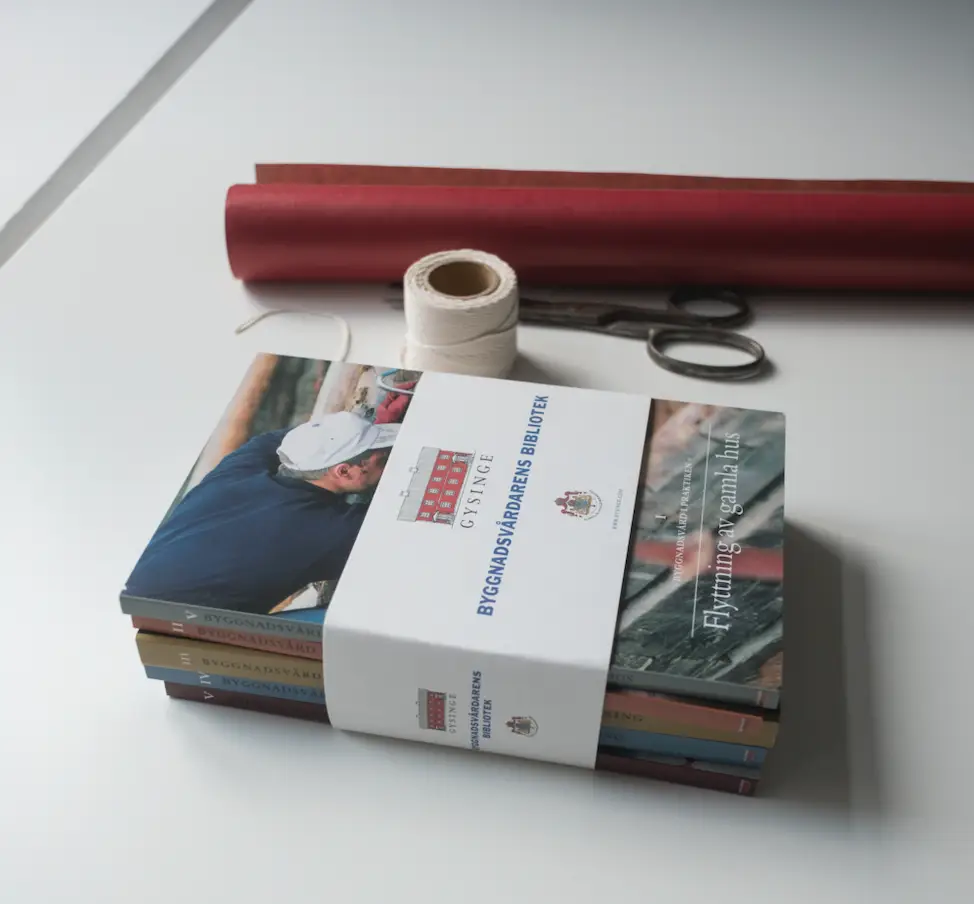
Relocation of old houses

285 SEK

Available in central stock
Quick facts

Andreas Skatter

Weight 0,35 kg
Del i serie

1/5

Sidor

112

Författare

Göran Gudmundsson

Förlag

Gysinge Center for Building Conservation

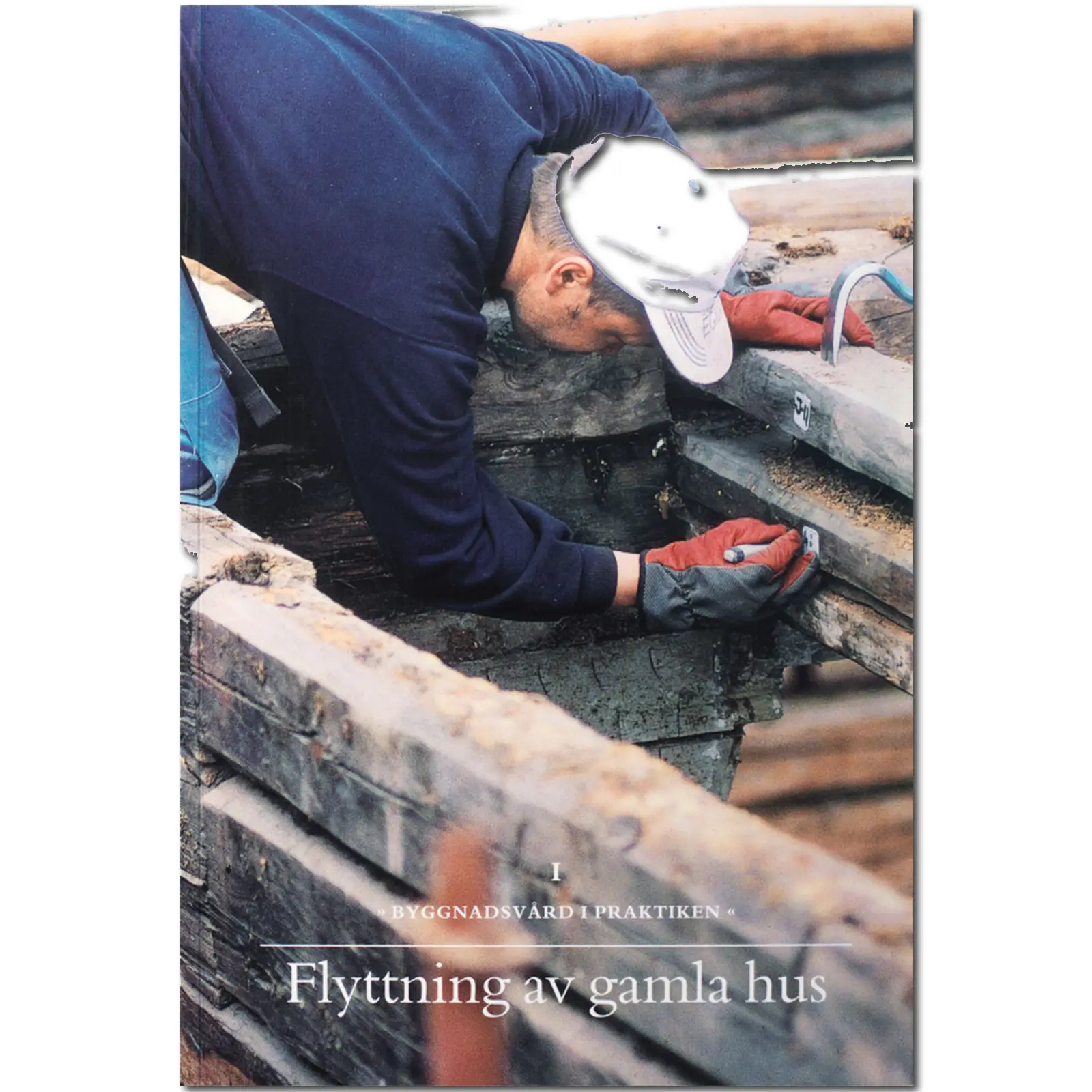
Moving Old Houses is the first book in the series – Building Conservation in Practice.

The book describes, step by step, how the work of moving an old house is done. Documentation, research into the history of the house, marking, demolition and reconstruction. The construction of the log house, from foundation and frame to finishes and permanent fixtures, is also described in detail. The book is compulsory reading for anyone intending to move an old wooden house, but even if you are only renovating a wooden house on site, you will get a lot of valuable advice.

Various principles of reconstruction are discussed, as well as the choice of craftsmen and methods and materials for interior renovation. Invaluable knowledge for those working with older houses.

Description

Moving Old Houses is the first book in the series – Building Conservation in Practice.

The book describes, step by step, how the work of moving an old house is done. Documentation, research into the history of the house, marking, demolition and reconstruction. The construction of the log house, from foundation and frame to finishes and permanent fixtures, is also described in detail. The book is compulsory reading for anyone intending to move an old wooden house, but even if you are only renovating a wooden house on site, you will get a lot of valuable advice.

Various principles of reconstruction are discussed, as well as the choice of craftsmen and methods and materials for interior renovation. Invaluable knowledge for those working with older houses.

Andreas Skatter

Weight 0,35 kg
Del i serie

1/5

Sidor

112

Författare

Göran Gudmundsson

Förlag

Gysinge Center for Building Conservation

Reviews

There are no reviews yet

Be the first to review “Relocation of old houses”

Your email address will not be published. Required fields are marked *

You may also need to

Related products

Swedish Grace a forgotten modernism

Swedish Grace is a term coined by contemporaries to denote neoclassical Swedish design from the 1910s and 1920s.

The most representative buildings from this era, such as the Stockholm City Library by Gunnar Asplund, the Resurrection Chapel by Sigurd Lewerentz and the Stockholm Concert Hall by Ivar Tengbom, are all world-famous, and most of what was built during the period is among the most highly regarded architecture in Sweden.

In this anthology, specialists from Sweden as well as other countries discuss different perspectives on Swedish Grace and show aspects that are still relevant today.

299 SEK

Building maintenance

How to get the time, advice and power to restore your home.

Join architectural historian Erika Åberg on her own house journey. Here she shares her experiences and best advice – from planning and strategies to practical projects. An old house or apartment with historical soul and atmosphere is a dream for many. A comfortable family life in a charming home with modern features, sound materials and beautiful details. But everyday life in an older building also means that there is always something to repair, replace or beautify.

Erika Åberg and her husband have been restoring their farm from scratch, inside and out, for just over a decade, and living family life with two young children in the meantime. How do you find the time, advice and energy?

In this book, she describes in ten chapters ten basic ways of thinking about building conservation and restoration. It covers everything from approaches to practical step-by-step moments.

The book shows you how to restore in a way that is sustainable; for the home, for the environment and for you and your family.

339 SEK

Period kitchens & bathrooms 1880-2000

The book provides an illustrative picture of the standard and style development of kitchens and bathrooms in Sweden’s apartment buildings and detached houses. The design and equipment of kitchens and bathrooms follow the spirit of the times through the decades, both technically and functionally. At the same time, history bears clear traces of how the view of housework and life in the home has changed over time.

The story begins in the 1880s, when many cities are growing rapidly in the wake of industrialization. There is a housing shortage and economic conditions are tight. Homes are heated by tiled stoves or fireplaces, food is cooked on wood stoves and there are dry toilets in the yard. 120 years later, in 2000, when the story ends, high standards in kitchens and bathrooms are a matter of course. New trends follow one another and many kitchens and bathrooms are torn out and rebuilt, long before it is technically necessary.

Increased knowledge of period interiors is a valuable basis for conservation, renovation and remodeling. Inspiration can be drawn from the floor plans, kitchen layouts and furnishings of different periods.

Cecilia Björk architect SAR/MSA and Laila Reppen architect SAR/MSA are authors and illustrators of books such as Så byggdes husen 1880-2000, Så byggdes staden, Så byggdes villan and Tidstypiskt. Gustav Bergström, “Rävjägaren”, is a civil engineer as well as a writer and opinion leader in architecture and building conservation.

The book is nominated for Book of the Year 2020.

395 SEK

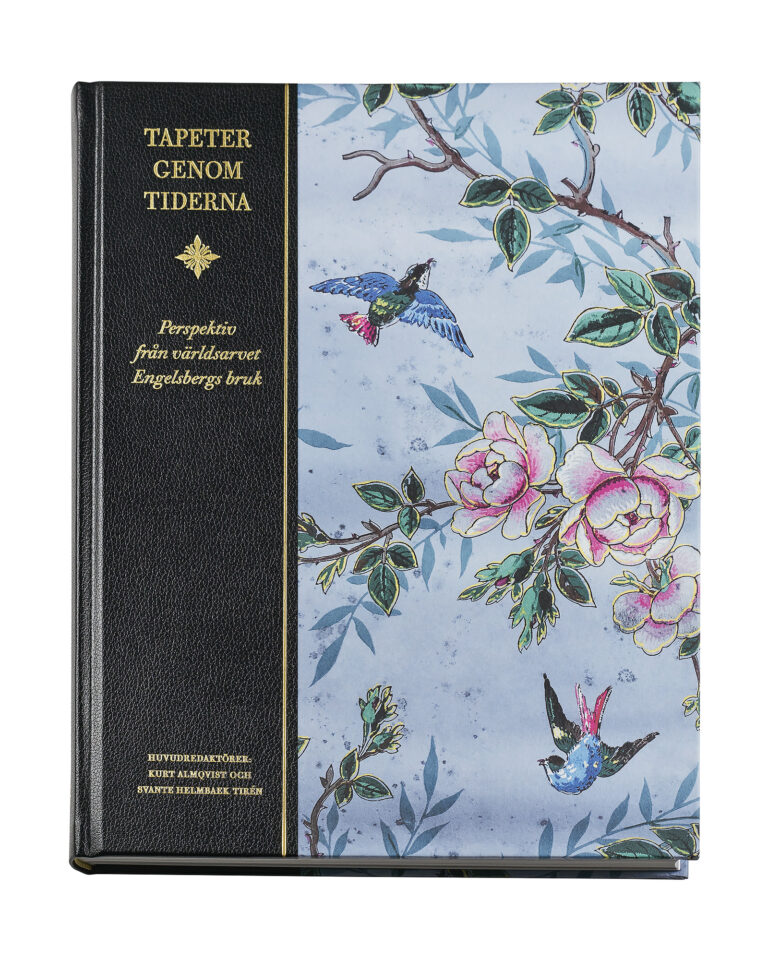
Wallpaper through the ages

Wallpaper through the ages – Perspectives from the Engelsberg Mill World Heritage Site.

Wallpaper has been one of our most important wall decorations for centuries and in various forms. Attitudes towards wallpaper have changed over time, especially in recent decades, but today there is a strong and growing interest in wallpaper and the historic preservation of buildings.

This book, which is the first stand-alone volume in a series on the Engelsberg Mill World Heritage Site, contributes to a better understanding of the history of wallpaper. Through the rich array of illustrations, both historical and modern, experts in several subjects share their in-depth knowledge of wallpaper, both as a craft and as an expression of different decorative ideals.

130 illustrations. Edition: French binding with gold foil and printed cover, wire-bound. 24 x 31 cm. 200 pages.

Authors: Erika Åberg, Lars Sjöberg, Stina Olinder Haubo, Ursula Sjöberg, Mats Qwarfordt, Martin Olin, Sara Lundström.

Editors-in-chief: Svante Holmbaek Tirén, Kurt Almqvist.

Design: Patric Leo.

395 SEK

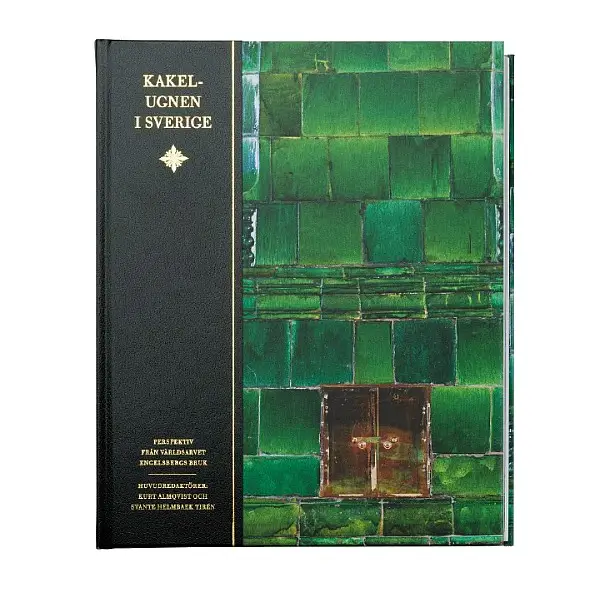
The tiled stove in Sweden

The tiled stove in Sweden – part two in the series Perspectives from the Engelsberg World Heritage Site.

Until the beginning of the 20th century, the tiled stove remained by far the most important source of heat in Swedish homes. Both the technology and the aesthetics were refined, even though the same basic principle is still used today in tiled stove installations. Today, the tiled stove is an important example of the Enlightenment’s work with technology, science and craftsmanship.

In 1767, the architect and superintendent Carl Johan Cronstedt presented a memorial entitled “Beskrifning på Ny Inrättning af Kakelugnar til Weds Besparing för Rikets råd”. It described a revolutionary construction that would change Swedish architecture and housekeeping for the next hundred and fifty years: the modern tiled stove.

The anthology is part of the series Perspectives from the Engelsberg Mill World Heritage Site. Previously published titles in the series are Tapeter genom tiderna. Future titles will also include Gardens during the age of the mills.

The editors-in-chief are Kurt Almqvist and Svante Helmbaek Tirén.

395 SEK

Colors of the Garden City

The Colors of the Garden City explains what is special about the centuries-old cultural environments of Bromma and other garden cities in Sweden. What is it that makes the garden city such an attractive form of living even for modern people? What gives character to the urban plan and to buildings and gardens from eras with different stylistic ideals? Learn the differences between the National Romanticism of the 1910s, the Neoclassicism of the 1920s and the Functionalism of the 1930s.

The authors began their mapping of garden cities in Sweden as early as the 1980s, by producing material with color schemes and character descriptions for typical houses of the time. Parts of the material are now in a permanent exhibition in Måleributiken in Alvik and have been shown at the City Museum 2013-2015.

The purpose of the book is to draw attention to the unique cultural values of the garden city for all of us and at the same time inspire you as a homeowner to learn more about architecture and coloring. A cultural environment needs to be protected and your house needs continuous care and attention. When repairing and renovating your house – make sure you do not damage the house due to ignorance.

445 SEK

Related articles

There are no related articles for this product.

Please leave a comment what you think about our new webshop