[currency_switcher]

SKU: 3091-90

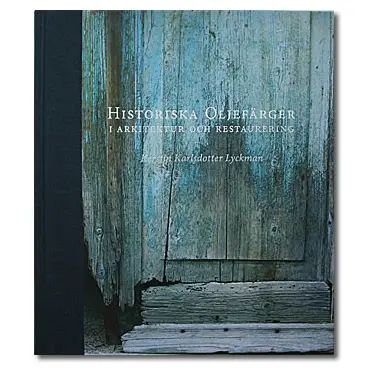
Historic oil paints in architecture and restoration

545 SEK

Available in central stock
Quick facts

Andreas Skatter

Weight 0,65 kg
Sidor

188

Vikt

120 g paper

Författare

Kerstin Lyckman

Historic oil paints in architecture and restoration is a thorough presentation of the composition of the linseed oil paints used in Swedish building painting from the 18th century onwards.

It provides a clear but multifaceted picture of how recipes have varied over different periods and how they have been adapted to different substrates.
Description

Historic oil paints in architecture and restoration is a thorough presentation of the composition of the linseed oil paints used in Swedish building painting from the 18th century onwards.

It provides a clear but multifaceted picture of how recipes have varied over different periods and how they have been adapted to different substrates.
Andreas Skatter

Weight 0,65 kg
Sidor

188

Vikt

120 g paper

Författare

Kerstin Lyckman

Reviews

There are no reviews yet

Be the first to review “Historic oil paints in architecture and restoration”

Your email address will not be published. Required fields are marked *

You may also need to

Price range: 95 SEK through 255 SEK

Select options This product has multiple variants. The options may be chosen on the product page

Related products

Exterior renovation

“Exterior Renovation” is the third book in the series – Building Maintenance in Practice.

All stages of an exterior renovation are described in detail. Roofs, chimneys, walls, windows, doors, foundations, extensions, lighting and more are covered, based on old Swedish building traditions. The traditional materials and craft methods are presented.

It also shows the ways to restore the exterior of an old house, but also appropriate solutions for how to raise the technical standard of a house, without doing violence to the cultural-historical value.

320 SEK

Period kitchens & bathrooms 1880-2000

The book provides an illustrative picture of the standard and style development of kitchens and bathrooms in Sweden’s apartment buildings and detached houses. The design and equipment of kitchens and bathrooms follow the spirit of the times through the decades, both technically and functionally. At the same time, history bears clear traces of how the view of housework and life in the home has changed over time.

The story begins in the 1880s, when many cities are growing rapidly in the wake of industrialization. There is a housing shortage and economic conditions are tight. Homes are heated by tiled stoves or fireplaces, food is cooked on wood stoves and there are dry toilets in the yard. 120 years later, in 2000, when the story ends, high standards in kitchens and bathrooms are a matter of course. New trends follow one another and many kitchens and bathrooms are torn out and rebuilt, long before it is technically necessary.

Increased knowledge of period interiors is a valuable basis for conservation, renovation and remodeling. Inspiration can be drawn from the floor plans, kitchen layouts and furnishings of different periods.

Cecilia Björk architect SAR/MSA and Laila Reppen architect SAR/MSA are authors and illustrators of books such as Så byggdes husen 1880-2000, Så byggdes staden, Så byggdes villan and Tidstypiskt. Gustav Bergström, “Rävjägaren”, is a civil engineer as well as a writer and opinion leader in architecture and building conservation.

The book is nominated for Book of the Year 2020.

395 SEK

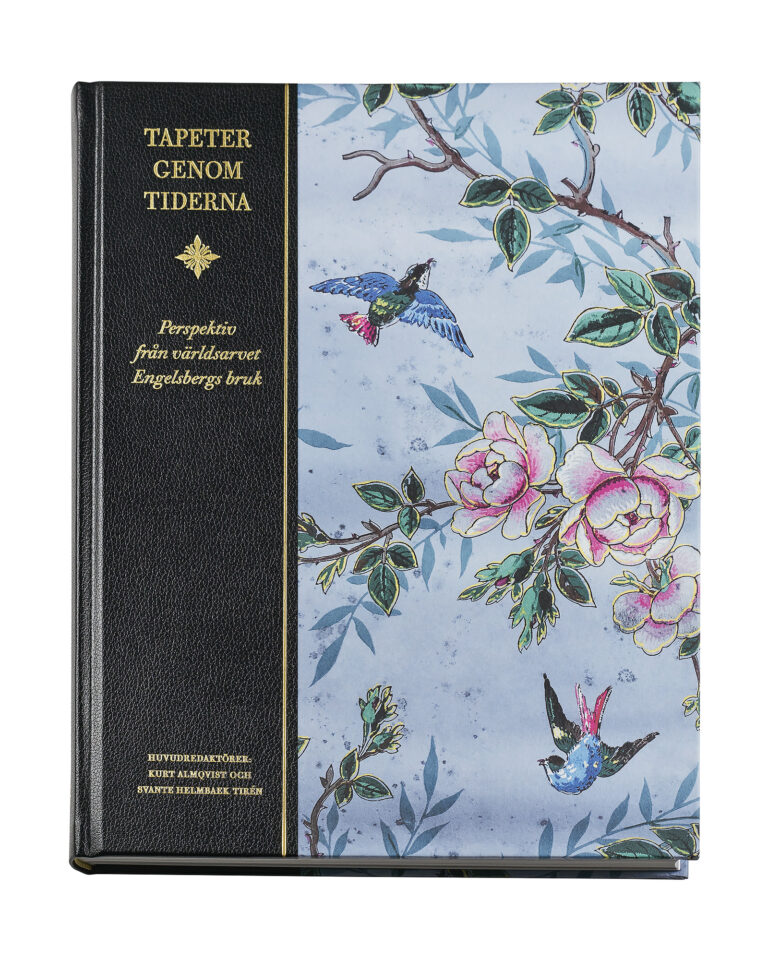
Wallpaper through the ages

Wallpaper through the ages – Perspectives from the Engelsberg Mill World Heritage Site.

Wallpaper has been one of our most important wall decorations for centuries and in various forms. Attitudes towards wallpaper have changed over time, especially in recent decades, but today there is a strong and growing interest in wallpaper and the historic preservation of buildings.

This book, which is the first stand-alone volume in a series on the Engelsberg Mill World Heritage Site, contributes to a better understanding of the history of wallpaper. Through the rich array of illustrations, both historical and modern, experts in several subjects share their in-depth knowledge of wallpaper, both as a craft and as an expression of different decorative ideals.

130 illustrations. Edition: French binding with gold foil and printed cover, wire-bound. 24 x 31 cm. 200 pages.

Authors: Erika Åberg, Lars Sjöberg, Stina Olinder Haubo, Ursula Sjöberg, Mats Qwarfordt, Martin Olin, Sara Lundström.

Editors-in-chief: Svante Holmbaek Tirén, Kurt Almqvist.

Design: Patric Leo.

395 SEK

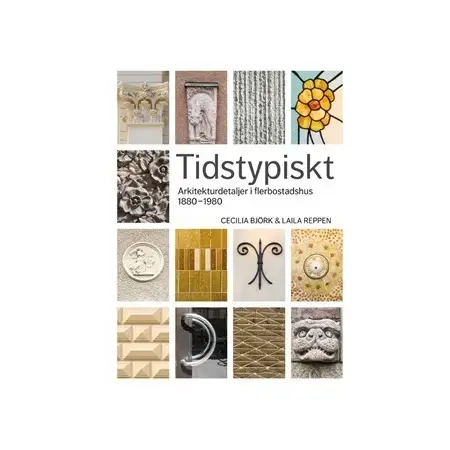
Typical of the time

Stylistic shifts in everyday architecture
Tidstypiskt gives those who influence and develop residential buildings and interiors a tool to base long-term sustainable management and development of the building stock on knowledge of existing values.

The authors take us on a hundred-year journey through stylistic changes in everyday architecture. Typical building details from Stockholm are presented decade by decade. From the classicist architecture of the 1880s via the stripped-down functionalism of the 1930s to the 1970s return to the grammar of the stone city as an ideal.

The building details vary with the prevailing architectural style, from the composition of the facades to the division of the windows and the design of the door handles. The reader is given the opportunity to learn and interpret the buildings and details of different periods. Knowledge provides richer experiences and constantly new impressions of everyday architecture – our built cultural heritage.

Photographs and drawings clearly show the development of residential buildings in the city and the traces left by different styles.

A drawing section makes it possible to date door linings and floor plinths – or to use the drawings to make new ones.

The book is aimed at architects, real estate developers, property managers, property owners, but also at housing associations and homeowners. The book is also suitable for teaching purposes.

615 SEK

How the villa was built 1890-2010

Så byggdes villan is a unique exposé of a significant part of our cultural heritage – the everyday architecture of villa construction in Sweden. The book shows typical villas and characteristic building details decade by decade, from the first villas built in the 1890s to villas built in the first decade of the 2000s. Style ideals have varied over different time periods. Architecture, floor plans, structures and interiors have changed with the times. The general features of this development are shown here through a variety of new accurate illustrations in scale. Each villa has its own history and its own conditions. For the homeowner who wants to renovate his house with period carpentry, there is a drawing section with carpentry and building details, such as floor plinths, window linings and ceiling moldings.

645 SEK

The custodian’s library

Byggnadsvårdarens bibliotek is a collection of Gysinge’s own useful book series – Byggnadsvård i praktiken. Written by Göran Gudmundsson, one of the enthusiasts and founders of Gysinge Center for Building Conservation. Cardboard box in matte paper.

The books are invaluable for anyone who owns or has recently bought an old house that needs looking after. They provide in-depth practical tips, advice on construction, style eras, restoration and approaches to building care for the different areas indicated by the books’ titles:

Relocation of old houses

The heat in old houses

Exterior renovation

Interior renovation

Painted floors

The books can also be purchased separately, but the package price for the collected books is significantly cheaper.

1.195 SEK

Related articles

There are no related articles for this product.

Please leave a comment what you think about our new webshop