[currency_switcher]

SKU: 3091-6

Log house, writing

175 SEK

Available in central stock
Quick facts

Andreas Skatter

Weight 0,2 kg
Sidor

48

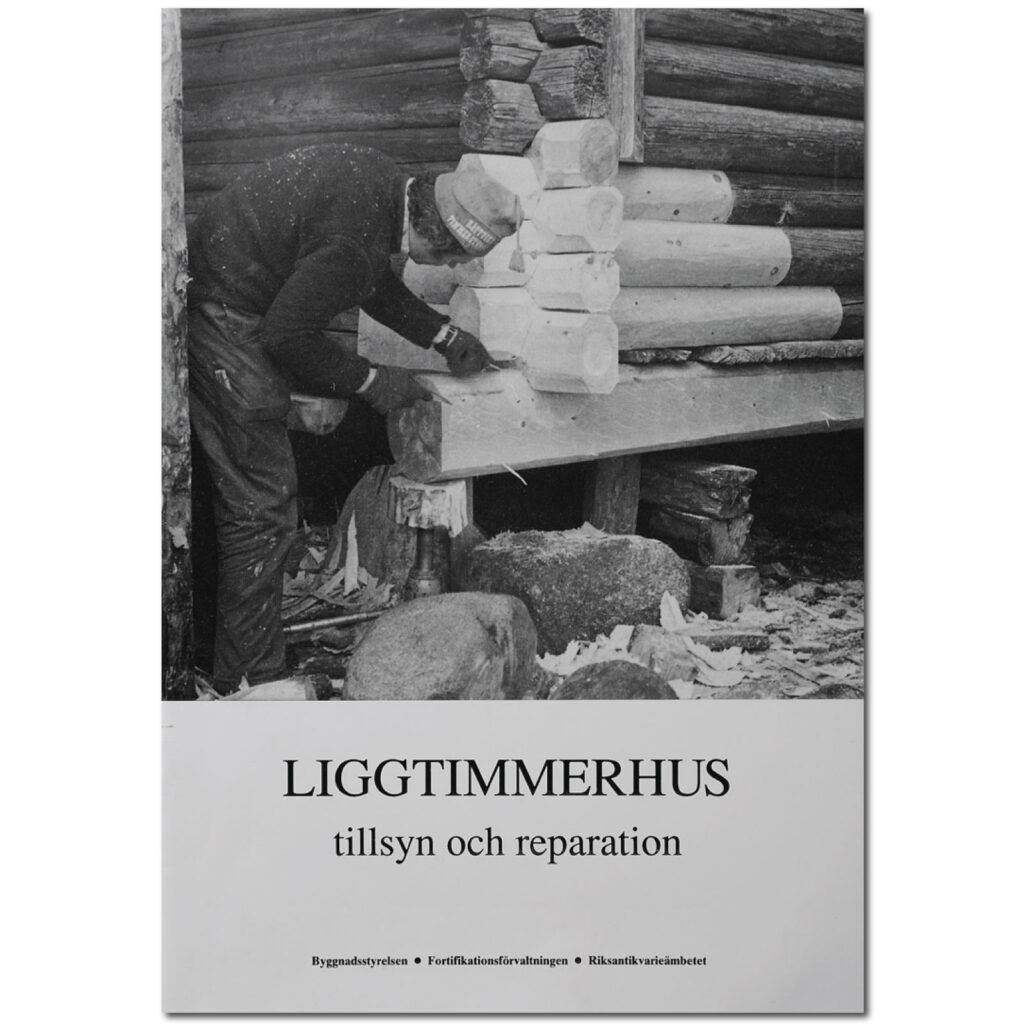
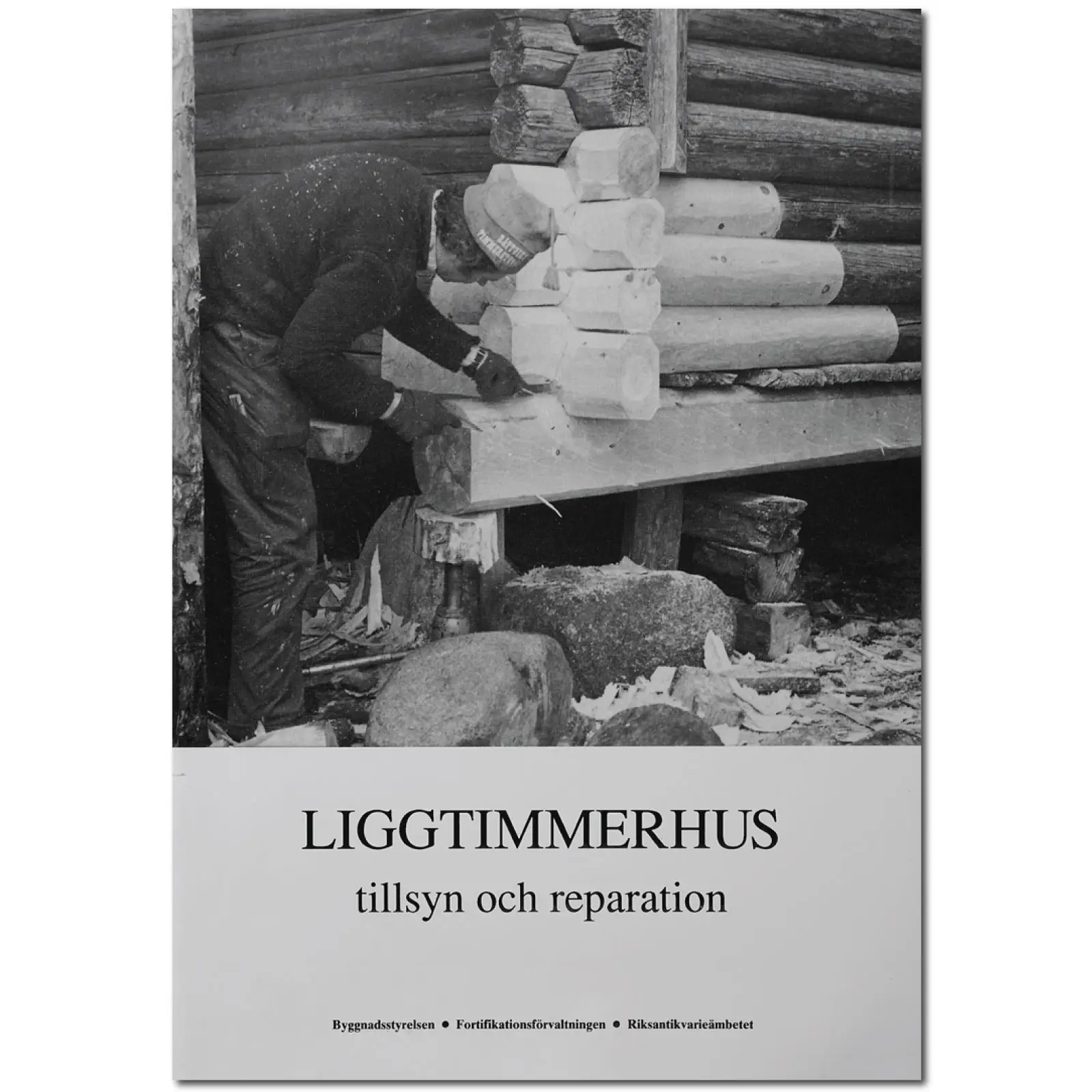
Supervision and repair. No building type has such historical roots as the log house. It has been a house for both the common man and the gentry and has come to characterize our older building environment to a great extent.

The report shows how log houses can be cared for and repaired to preserve their heritage value. The key is careful supervision and repairs that are adapted to the authentic log technique.

The report is written for both property owners and construction professionals. Richly illustrated.
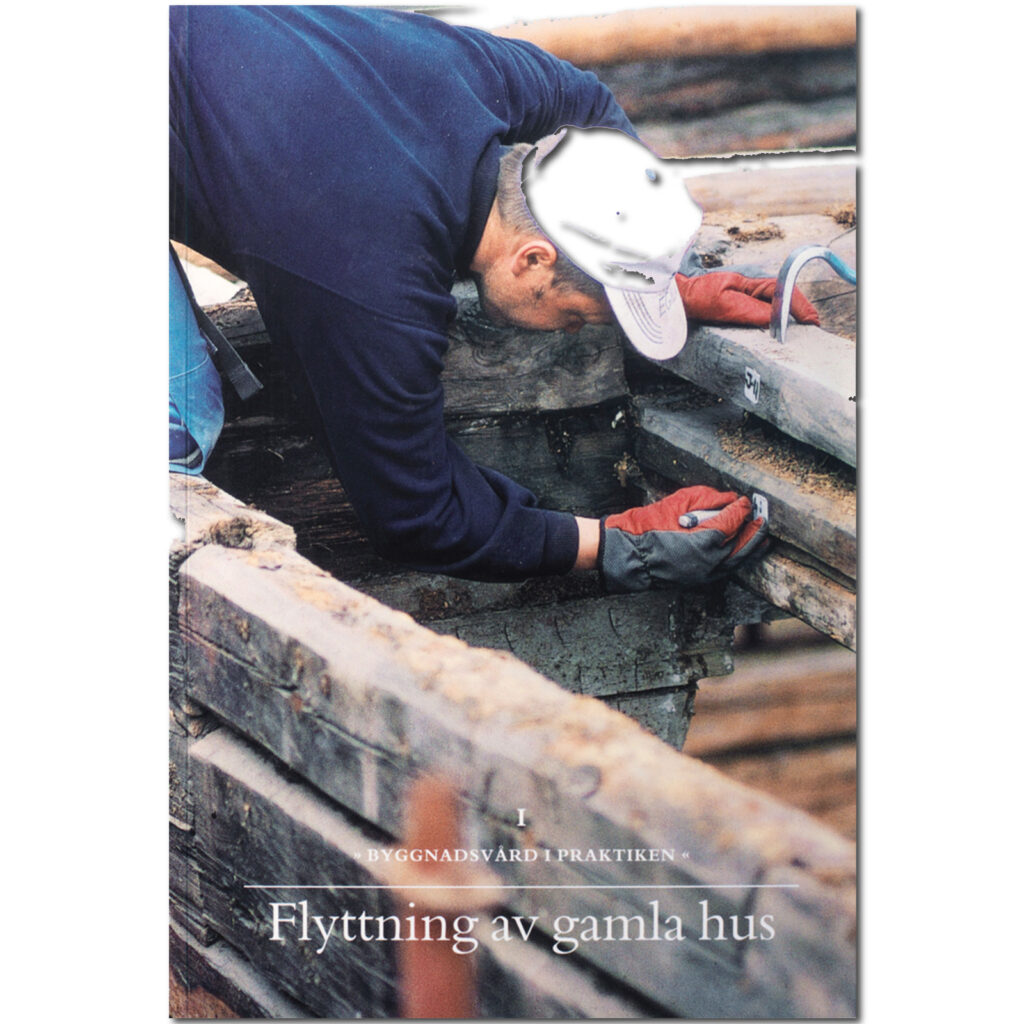
Publisher: Swedish National Heritage Board Authors: Henrik Kjellberg and Uno Söderberg. Published in 2012

Description

Supervision and repair. No building type has such historical roots as the log house. It has been a house for both the common man and the gentry and has come to characterize our older building environment to a great extent.

The report shows how log houses can be cared for and repaired to preserve their heritage value. The key is careful supervision and repairs that are adapted to the authentic log technique.

The report is written for both property owners and construction professionals. Richly illustrated.
Andreas Skatter

Weight 0,2 kg
Sidor

48

Reviews

There are no reviews yet.

Be the first to review “Log house, writing”

Your email address will not be published. Required fields are marked *

You may also need to

Related products

Windows and doors

In this book, architectural antiquarian Erika Åberg shows you how to maintain, renovate and make creative reuse projects with old windows and doors.

“Windows are the soul of the house” has become almost a proverb in the building industry. What does it really mean? What are the significance and qualities of old windows? And what about doors? Here, Erika Åberg talks about design and stylistic approaches through the ages, different types of glass, function – or the lack of it – and the challenges of keeping the heat in and the cold out.

The timber used for windows and doors in the past was the best available, of a quality that is hard to find today. If cared for properly, it can last for hundreds of years. Here you will learn about restoration of varying degrees of difficulty, from first aid to full restoration.

With smart techniques and solutions, you can get windows and doors that are beautiful and fit your house. It goes without saying that preserving is more environmentally friendly than buying new. Here is an example of an orangery built with recycled windows.

Erika Åberg tells you in text and pictures how you can take care of and enjoy your old windows and doors for a long time to come.

269 SEK

Do over do right around the country with the Renovation Frenzy

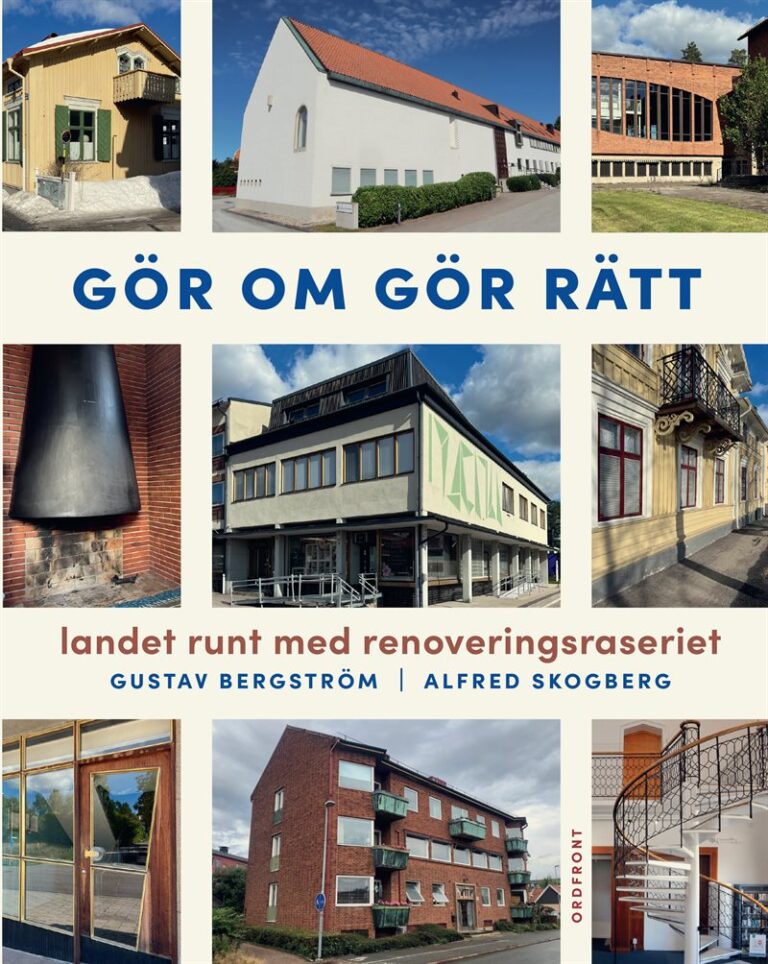
Do it again, do it right – Around the country with Renoveringsraseriet by authors Gustav Bergström and Alfred Skogberg.

Over the past decades, we have seen container after container filled with our common building heritage. Beautiful 1950s kitchens are worn out and replaced by mass-produced ones, mouth-blown window glass ends up in landfills, and cheap, unmaintainable materials replace old and solid ones.

Since its inception in 2020, Renovation Fury has criticized careless renovations on their popular Facebook and Instagram accounts of the same name.

In this book, we follow the founders, Gustav Bergström and Alfred Skogberg, on a journey to twelve Swedish cities; from Kiruna in the north to Sölvesborg in the south. They talk to architects, urban planners and experts and point out both good examples and pure disasters.

Do it again, do it right is both a portrait of the times and a cry for help. Caring and preserving is not just about nostalgia, it’s a must if we want to achieve our climate goals. It’s high time we started to see the value of craftsmanship and quality, and realize that new is not always better!

279 SEK

Cinder blocks and cinder houses

Houses made of slag – many have never seen them, others stand in awe of the slag bricks that shimmer in blue, green, gray and even change color with the light. Intriguing structures, tiny lumps of iron, charcoal striations – what can’t you find when you take a closer look at the building material? What is it, many people ask today. When were the houses built? Why was cinder block made?

Slagstone is our first artificial building stone, used in ore fields as an alternative to building timber. The forest was needed for the production of charcoal, the fuel for smelting ore and the extraction of copper and iron. The metals were exported, bringing income to Sweden and raising people’s standard of living. Slag was a by-product of metal production. The metals have been sold around the world, the workplaces are closed down and gone – but the slag remains and tells us – about ores and technological development, about heavy manual labor and skilled craftsmanship. No two cinder blocks are the same. Never again can one be made.

DESCRIPTION The book aims to raise awareness of the buildings. The oldest ones date from the 18th century, the youngest from the early 20th century. They are churches or cellars and everything in between. The pictures aim to show how amazing the buildings are and the text provides information about their background, construction and care. The hope is that people will be inspired to take pride in the slag houses and care for these unique buildings, made from a material that is irreplaceable today.

TIP Don’t forget to take a look at our beautiful Bagarstuga in Gysinge, which is built of cinder block.

395 SEK

Period kitchens & bathrooms 1880-2000

The book provides an illustrative picture of the standard and style development of kitchens and bathrooms in Sweden’s apartment buildings and detached houses. The design and equipment of kitchens and bathrooms follow the spirit of the times through the decades, both technically and functionally. At the same time, history bears clear traces of how the view of housework and life in the home has changed over time.

The story begins in the 1880s, when many cities are growing rapidly in the wake of industrialization. There is a housing shortage and economic conditions are tight. Homes are heated by tiled stoves or fireplaces, food is cooked on wood stoves and there are dry toilets in the yard. 120 years later, in 2000, when the story ends, high standards in kitchens and bathrooms are a matter of course. New trends follow one another and many kitchens and bathrooms are torn out and rebuilt, long before it is technically necessary.

Increased knowledge of period interiors is a valuable basis for conservation, renovation and remodeling. Inspiration can be drawn from the floor plans, kitchen layouts and furnishings of different periods.

Cecilia Björk architect SAR/MSA and Laila Reppen architect SAR/MSA are authors and illustrators of books such as Så byggdes husen 1880-2000, Så byggdes staden, Så byggdes villan and Tidstypiskt. Gustav Bergström, “Rävjägaren”, is a civil engineer as well as a writer and opinion leader in architecture and building conservation.

The book is nominated for Book of the Year 2020.

395 SEK

The tiled stove in Sweden

The tiled stove in Sweden – part two in the series Perspectives from the Engelsberg World Heritage Site.

Until the beginning of the 20th century, the tiled stove remained by far the most important source of heat in Swedish homes. Both the technology and the aesthetics were refined, even though the same basic principle is still used today in tiled stove installations. Today, the tiled stove is an important example of the Enlightenment’s work with technology, science and craftsmanship.

In 1767, the architect and superintendent Carl Johan Cronstedt presented a memorial entitled “Beskrifning på Ny Inrättning af Kakelugnar til Weds Besparing för Rikets råd”. It described a revolutionary construction that would change Swedish architecture and housekeeping for the next hundred and fifty years: the modern tiled stove.

The anthology is part of the series Perspectives from the Engelsberg Mill World Heritage Site. Previously published titles in the series are Tapeter genom tiderna. Future titles will also include Gardens during the age of the mills.

The editors-in-chief are Kurt Almqvist and Svante Helmbaek Tirén.

395 SEK

How the villa was built 1890-2010

Så byggdes villan is a unique exposé of a significant part of our cultural heritage – the everyday architecture of villa construction in Sweden. The book shows typical villas and characteristic building details decade by decade, from the first villas built in the 1890s to villas built in the first decade of the 2000s. Style ideals have varied over different time periods. Architecture, floor plans, structures and interiors have changed with the times. The general features of this development are shown here through a variety of new accurate illustrations in scale. Each villa has its own history and its own conditions. For the homeowner who wants to renovate his house with period carpentry, there is a drawing section with carpentry and building details, such as floor plinths, window linings and ceiling moldings.

645 SEK

Related articles

There are no related articles for this product.

Please leave a comment what you think about our new webshop