[currency_switcher]

SKU: 3091-77

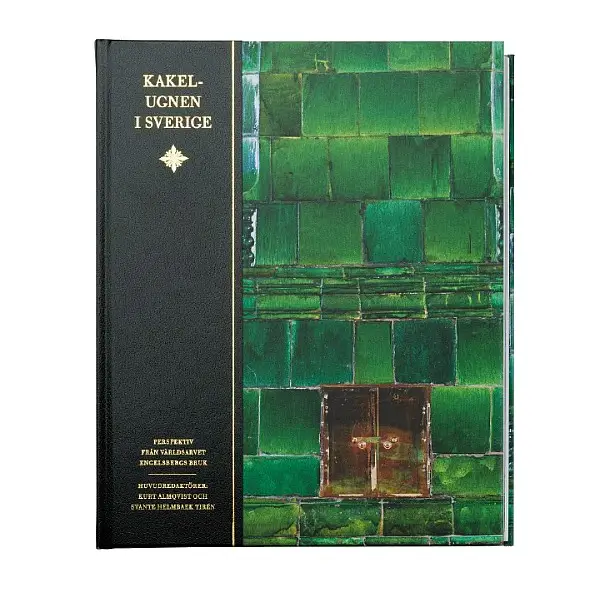
The tiled stove in Sweden

395 SEK

Available in central stock
Quick facts

Andreas Skatter

Weight 1,71 kg
Förlag

Stolpe Publishing House

Format

Hardcover/half-french

Utgiven

2021

Sidor

230

Del i serie

2/3

Författare

C. Frängsmyr, K.Grandin, Mr. Perers, C.Pettersson, S.Scherman. A.Stjernberg, L.Rollenhagen Tilly, B. Vahlne. V. Wenander, S. Helmbaek Tirén

The tiled stove in Sweden – part two in the series Perspectives from the Engelsberg World Heritage Site.

Until the beginning of the 20th century, the tiled stove remained by far the most important source of heat in Swedish homes. Both the technology and the aesthetics were refined, even though the same basic principle is still used today in tiled stove installations. Today, the tiled stove is an important example of the Enlightenment’s work with technology, science and craftsmanship.

In 1767, the architect and superintendent Carl Johan Cronstedt presented a memorial entitled “Beskrifning på Ny Inrättning af Kakelugnar til Weds Besparing för Rikets råd”. It described a revolutionary construction that would change Swedish architecture and housekeeping for the next hundred and fifty years: the modern tiled stove.

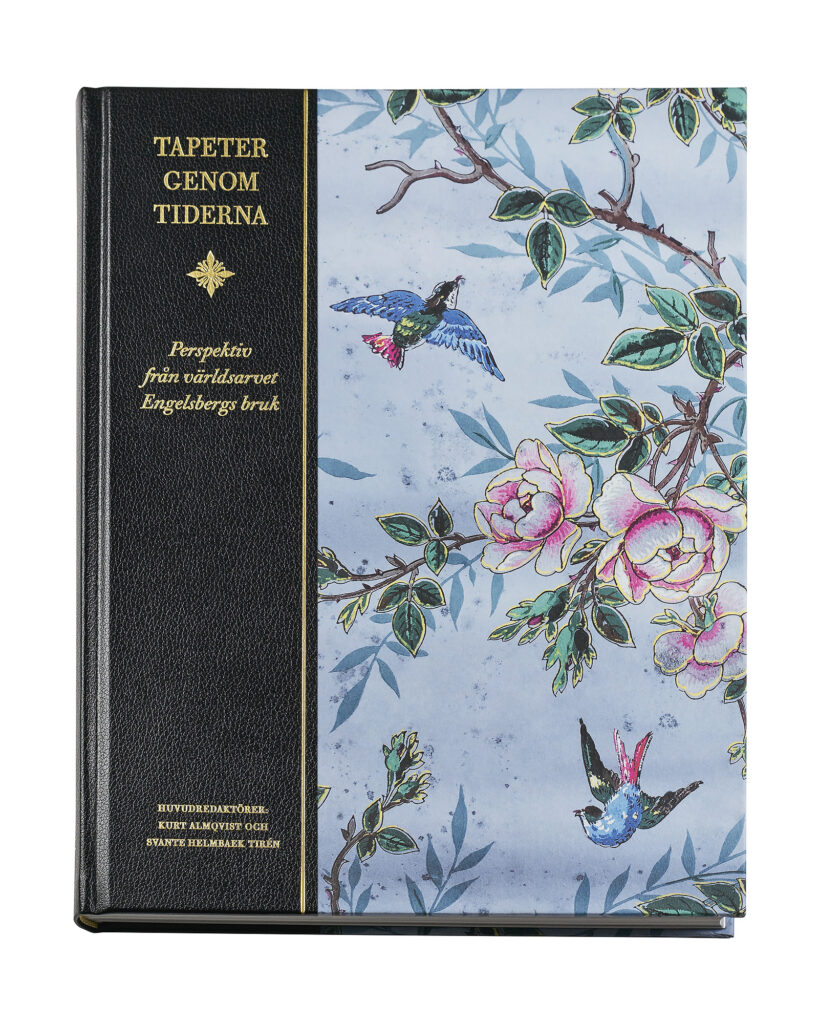
The anthology is part of the series Perspectives from the Engelsberg Mill World Heritage Site. Previously published titles in the series are Tapeter genom tiderna. Future titles will also include Gardens during the age of the mills.

The editors-in-chief are Kurt Almqvist and Svante Helmbaek Tirén.
Description

The tiled stove in Sweden – part two in the series Perspectives from the Engelsberg World Heritage Site.

Until the beginning of the 20th century, the tiled stove remained by far the most important source of heat in Swedish homes. Both the technology and the aesthetics were refined, even though the same basic principle is still used today in tiled stove installations. Today, the tiled stove is an important example of the Enlightenment’s work with technology, science and craftsmanship.

In 1767, the architect and superintendent Carl Johan Cronstedt presented a memorial entitled “Beskrifning på Ny Inrättning af Kakelugnar til Weds Besparing för Rikets råd”. It described a revolutionary construction that would change Swedish architecture and housekeeping for the next hundred and fifty years: the modern tiled stove.

The anthology is part of the series Perspectives from the Engelsberg Mill World Heritage Site. Previously published titles in the series are Tapeter genom tiderna. Future titles will also include Gardens during the age of the mills.

The editors-in-chief are Kurt Almqvist and Svante Helmbaek Tirén.
Andreas Skatter

Weight 1,71 kg
Förlag

Stolpe Publishing House

Format

Hardcover/half-french

Utgiven

2021

Sidor

230

Del i serie

2/3

Författare

C. Frängsmyr, K.Grandin, Mr. Perers, C.Pettersson, S.Scherman. A.Stjernberg, L.Rollenhagen Tilly, B. Vahlne. V. Wenander, S. Helmbaek Tirén

Reviews

There are no reviews yet.

Be the first to review “The tiled stove in Sweden”

Your email address will not be published. Required fields are marked *

You may also need to

Related products

Log house, writing

Supervision and repair. No building type has such historical roots as the log house. It has been a house for both the common man and the gentry and has come to characterize our older building environment to a great extent.

The report shows how log houses can be cared for and repaired to preserve their heritage value. The key is careful supervision and repairs that are adapted to the authentic log technique.

The report is written for both property owners and construction professionals. Richly illustrated.

175 SEK

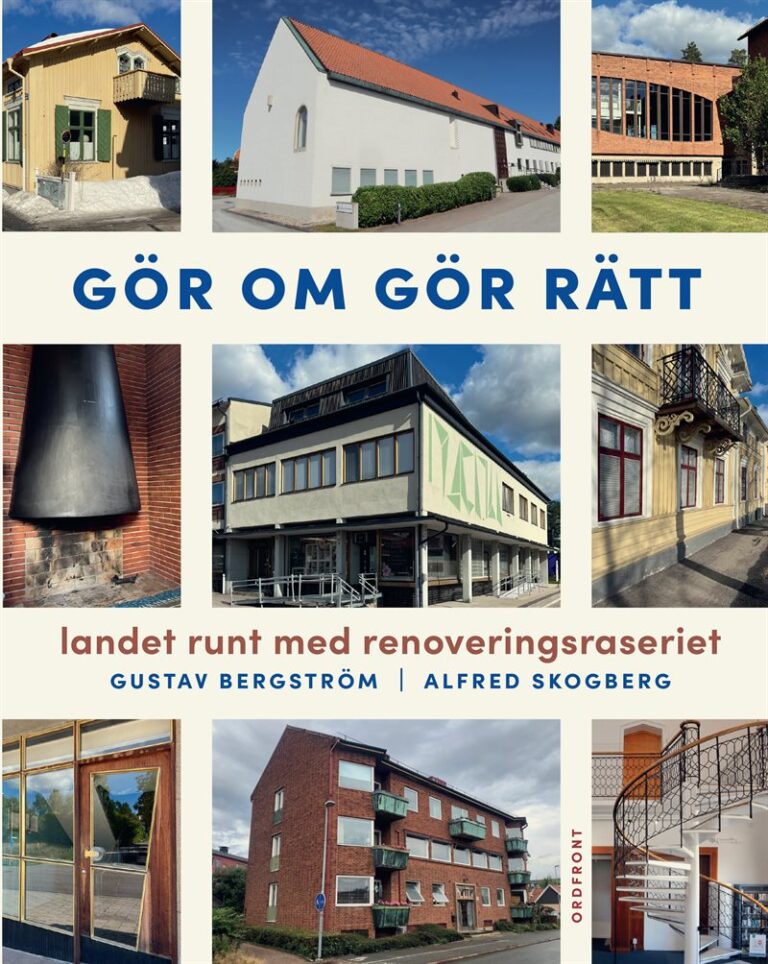
Do over do right around the country with the Renovation Frenzy

Do it again, do it right – Around the country with Renoveringsraseriet by authors Gustav Bergström and Alfred Skogberg.

Over the past decades, we have seen container after container filled with our common building heritage. Beautiful 1950s kitchens are worn out and replaced by mass-produced ones, mouth-blown window glass ends up in landfills, and cheap, unmaintainable materials replace old and solid ones.

Since its inception in 2020, Renovation Fury has criticized careless renovations on their popular Facebook and Instagram accounts of the same name.

In this book, we follow the founders, Gustav Bergström and Alfred Skogberg, on a journey to twelve Swedish cities; from Kiruna in the north to Sölvesborg in the south. They talk to architects, urban planners and experts and point out both good examples and pure disasters.

Do it again, do it right is both a portrait of the times and a cry for help. Caring and preserving is not just about nostalgia, it’s a must if we want to achieve our climate goals. It’s high time we started to see the value of craftsmanship and quality, and realize that new is not always better!

279 SEK

Exterior renovation

“Exterior Renovation” is the third book in the series – Building Maintenance in Practice.

All stages of an exterior renovation are described in detail. Roofs, chimneys, walls, windows, doors, foundations, extensions, lighting and more are covered, based on old Swedish building traditions. The traditional materials and craft methods are presented.

It also shows the ways to restore the exterior of an old house, but also appropriate solutions for how to raise the technical standard of a house, without doing violence to the cultural-historical value.

320 SEK

Colors of the Garden City

The Colors of the Garden City explains what is special about the centuries-old cultural environments of Bromma and other garden cities in Sweden. What is it that makes the garden city such an attractive form of living even for modern people? What gives character to the urban plan and to buildings and gardens from eras with different stylistic ideals? Learn the differences between the National Romanticism of the 1910s, the Neoclassicism of the 1920s and the Functionalism of the 1930s.

The authors began their mapping of garden cities in Sweden as early as the 1980s, by producing material with color schemes and character descriptions for typical houses of the time. Parts of the material are now in a permanent exhibition in Måleributiken in Alvik and have been shown at the City Museum 2013-2015.

The purpose of the book is to draw attention to the unique cultural values of the garden city for all of us and at the same time inspire you as a homeowner to learn more about architecture and coloring. A cultural environment needs to be protected and your house needs continuous care and attention. When repairing and renovating your house – make sure you do not damage the house due to ignorance.

445 SEK

Building maintenance for apartments

Building Care for Apartments takes its starting point in the emergence of the modern city at the end of the 19th century and allows us to follow the development of the Swedish apartment decade by decade, until the end of the 1980s. By highlighting how political forces have interacted with aesthetic ideals and construction technology, the book provides a unique insight into why our homes look the way they do. From the design of residential areas and the appearance of facades, to the division of rooms, the colors of walls and the specific profiles of skirting boards. In an accessible way, you will learn about the rich history hidden behind the perhaps worn floors or flaking wallpaper.

The second part of the book consists of an extensive chapter devoted entirely to the practical aspects of renovation and apartment care. It presents concrete strategies for approaching and dealing with issues related to care and renovation, as well as practical tips on how best to proceed when faced with the need to restore or replace something.

Building Conservation for Apartments is an indispensable tool for anyone interested in preserving their apartment and its history.

445 SEK

How the villa was built 1890-2010

Så byggdes villan is a unique exposé of a significant part of our cultural heritage – the everyday architecture of villa construction in Sweden. The book shows typical villas and characteristic building details decade by decade, from the first villas built in the 1890s to villas built in the first decade of the 2000s. Style ideals have varied over different time periods. Architecture, floor plans, structures and interiors have changed with the times. The general features of this development are shown here through a variety of new accurate illustrations in scale. Each villa has its own history and its own conditions. For the homeowner who wants to renovate his house with period carpentry, there is a drawing section with carpentry and building details, such as floor plinths, window linings and ceiling moldings.

645 SEK

Related articles

There are no related articles for this product.

Please leave a comment what you think about our new webshop