SKU: 3091-23

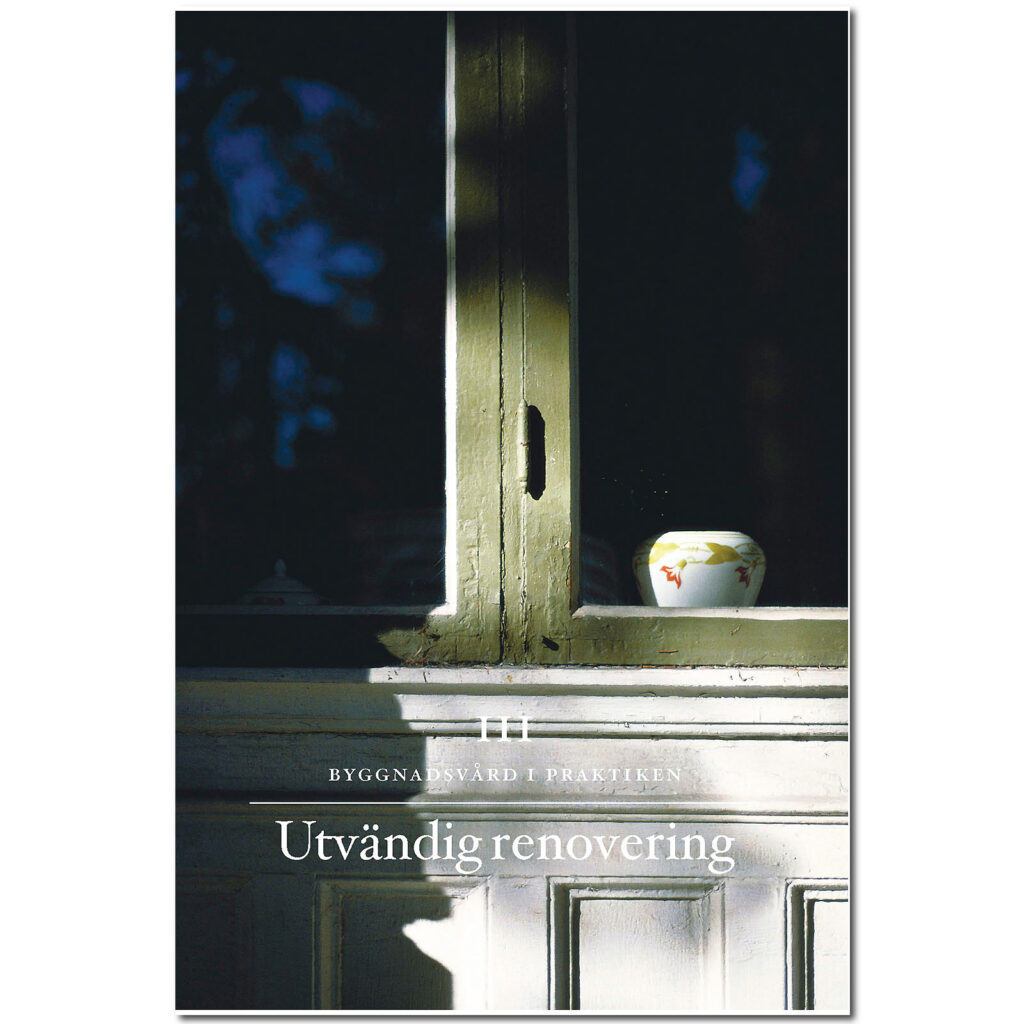
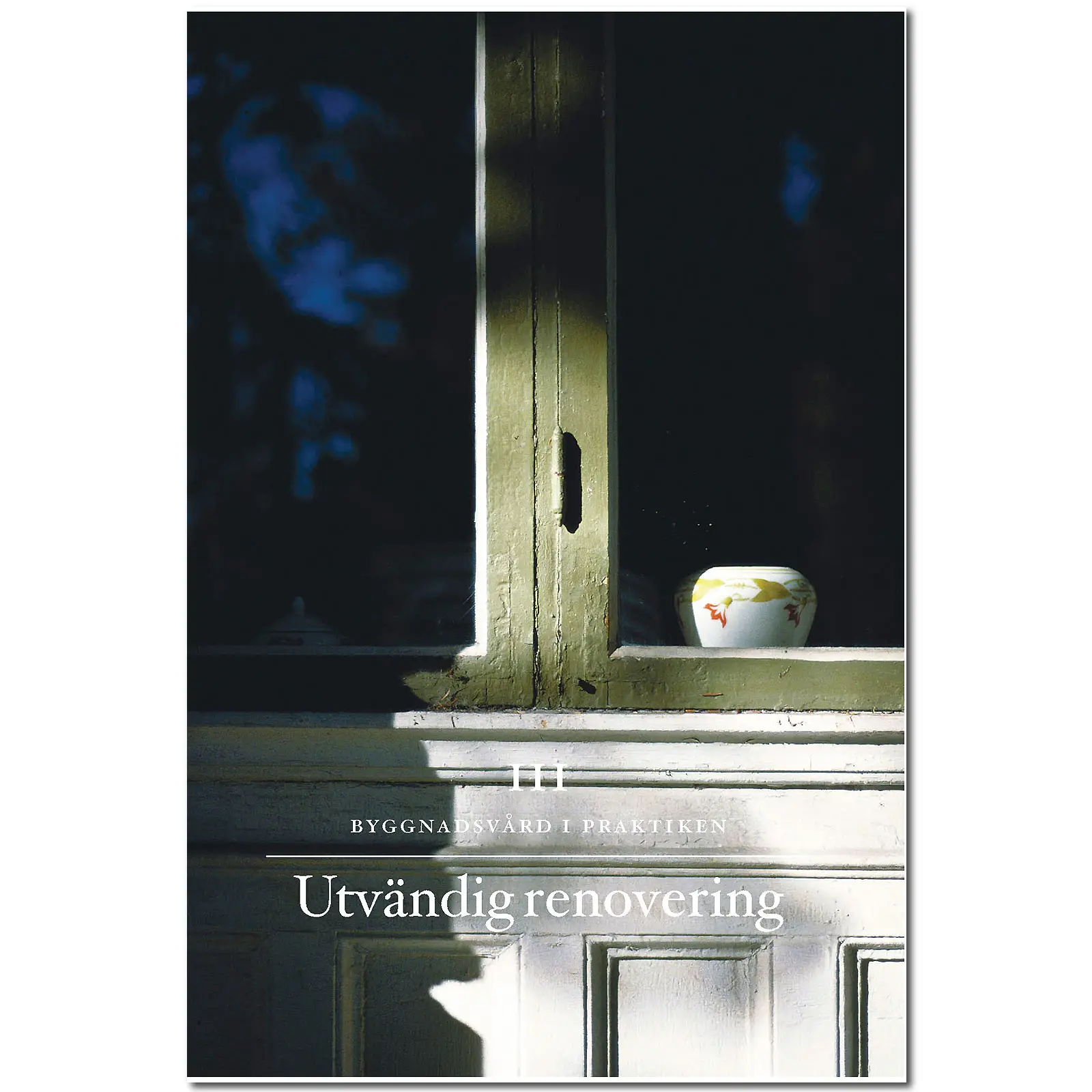
Exterior renovation

EUR29.28

Available in central stock
Quick facts

Andreas Skatter

Weight 0.6 kg
Part of a series

3/5

Sidor

202

Author

Göran Gudmundsson

Publisher

Gysinge Center for Building Conservation

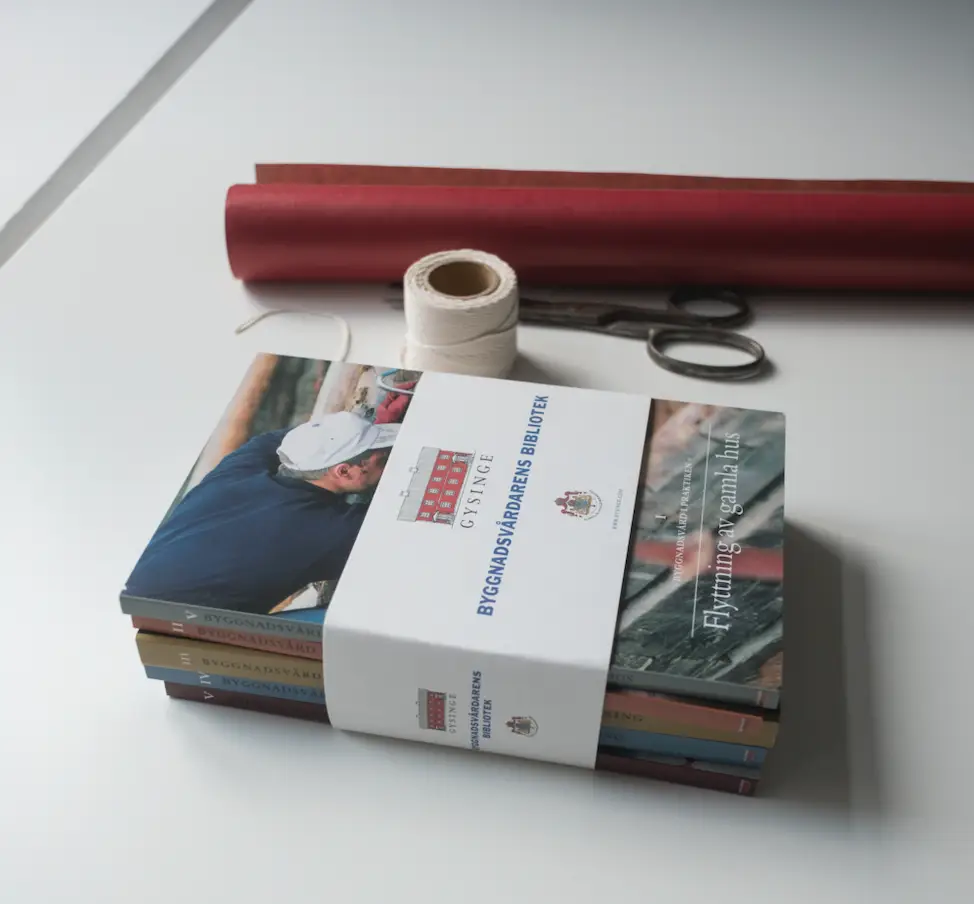
“Exterior Renovation” is the third book in the series – Building Maintenance in Practice.

All stages of an exterior renovation are described in detail. Roofs, chimneys, walls, windows, doors, foundations, extensions, lighting and more are covered, based on old Swedish building traditions. The traditional materials and craft methods are presented.

It also shows the ways to restore the exterior of an old house, but also appropriate solutions for how to raise the technical standard of a house, without doing violence to the cultural-historical value.
Description

“Exterior Renovation” is the third book in the series – Building Maintenance in Practice.

All stages of an exterior renovation are described in detail. Roofs, chimneys, walls, windows, doors, foundations, extensions, lighting and more are covered, based on old Swedish building traditions. The traditional materials and craft methods are presented.

It also shows the ways to restore the exterior of an old house, but also appropriate solutions for how to raise the technical standard of a house, without doing violence to the cultural-historical value.
Andreas Skatter

Weight 0.6 kg
Part of a series

3/5

Sidor

202

Author

Göran Gudmundsson

Publisher

Gysinge Center for Building Conservation

Reviews

There are no reviews yet

Be the first to review “Exterior renovation”

Your email address will not be published. Required fields are marked *

You may also need to

Related products

Swedish Grace a forgotten modernism

Swedish Grace is a term coined by contemporaries to denote neoclassical Swedish design from the 1910s and 1920s.

The most representative buildings from this era, such as the Stockholm City Library by Gunnar Asplund, the Resurrection Chapel by Sigurd Lewerentz and the Stockholm Concert Hall by Ivar Tengbom, are all world-famous, and most of what was built during the period is among the most highly regarded architecture in Sweden.

In this anthology, specialists from Sweden as well as other countries discuss different perspectives on Swedish Grace and show aspects that are still relevant today.

EUR27.36

Period kitchens & bathrooms 1880-2000

The book provides an illustrative picture of the standard and style development of kitchens and bathrooms in Sweden’s apartment buildings and detached houses. The design and equipment of kitchens and bathrooms follow the spirit of the times through the decades, both technically and functionally. At the same time, history bears clear traces of how the view of housework and life in the home has changed over time.

The story begins in the 1880s, when many cities are growing rapidly in the wake of industrialization. There is a housing shortage and economic conditions are tight. Homes are heated by tiled stoves or fireplaces, food is cooked on wood stoves and there are dry toilets in the yard. 120 years later, in 2000, when the story ends, high standards in kitchens and bathrooms are a matter of course. New trends follow one another and many kitchens and bathrooms are torn out and rebuilt, long before it is technically necessary.

Increased knowledge of period interiors is a valuable basis for conservation, renovation and remodeling. Inspiration can be drawn from the floor plans, kitchen layouts and furnishings of different periods.

Cecilia Björk architect SAR/MSA and Laila Reppen architect SAR/MSA are authors and illustrators of books such as SÃ¥ byggdes husen 1880-2000, SÃ¥ byggdes staden, SÃ¥ byggdes villan and Tidstypiskt. Gustav Bergström, “Rävjägaren”, is a civil engineer as well as a writer and opinion leader in architecture and building conservation.

The book is nominated for Book of the Year 2020.

EUR36.14

Colors of the Garden City

The Colors of the Garden City explains what is special about the centuries-old cultural environments of Bromma and other garden cities in Sweden. What is it that makes the garden city such an attractive form of living even for modern people? What gives character to the urban plan and to buildings and gardens from eras with different stylistic ideals? Learn the differences between the National Romanticism of the 1910s, the Neoclassicism of the 1920s and the Functionalism of the 1930s.

The authors began their mapping of garden cities in Sweden as early as the 1980s, by producing material with color schemes and character descriptions for typical houses of the time. Parts of the material are now in a permanent exhibition in MÃ¥leributiken in Alvik and have been shown at the City Museum 2013-2015.

The purpose of the book is to draw attention to the unique cultural values of the garden city for all of us and at the same time inspire you as a homeowner to learn more about architecture and coloring. A cultural environment needs to be protected and your house needs continuous care and attention. When repairing and renovating your house – make sure you do not damage the house due to ignorance.

EUR40.72

Building maintenance for apartments

Building Care for Apartments takes its starting point in the emergence of the modern city at the end of the 19th century and allows us to follow the development of the Swedish apartment decade by decade, until the end of the 1980s. By highlighting how political forces have interacted with aesthetic ideals and construction technology, the book provides a unique insight into why our homes look the way they do. From the design of residential areas and the appearance of facades, to the division of rooms, the colors of walls and the specific profiles of skirting boards. In an accessible way, you will learn about the rich history hidden behind the perhaps worn floors or flaking wallpaper.

The second part of the book consists of an extensive chapter devoted entirely to the practical aspects of renovation and apartment care. It presents concrete strategies for approaching and dealing with issues related to care and renovation, as well as practical tips on how best to proceed when faced with the need to restore or replace something.

Building Conservation for Apartments is an indispensable tool for anyone interested in preserving their apartment and its history.

EUR40.72

Landtmann buildings

Agricultural architect Charles Emil Löfvenskiöld (1810-1888) dreamed of reforming the Swedish countryside. A new architecture characterized by both beauty and rationality would combat poverty and misery. Bright, spacious and well-planned houses for both humans and animals were the basis for a humane and prosperous society. Only when the practical was also beautiful was it truly functional.

The purpose of the publication Landtmannabyggnader, hufvudsakligen för mindre jordbruk from 1868 was to disseminate the new findings in affordable and educational booklets with clear drawings and explanatory texts. Today, the work is an architectural classic that has had a major impact on Swedish building culture.

This reproduction is supplemented by an appendix with drawings by Löfvenskiöld’s pupil and longtime collaborator Pehr August Pettersson (1841-1906). They were originally published in his Landtmannabyggnader: ritningar för alla omrÃ¥den inom landthushÃ¥llningen from 1891, a sequel and tribute to Löfvenskiöld’s classic work.

EUR49.87

How the villa was built 1890-2010

SÃ¥ byggdes villan is a unique exposé of a significant part of our cultural heritage – the everyday architecture of villa construction in Sweden. The book shows typical villas and characteristic building details decade by decade, from the first villas built in the 1890s to villas built in the first decade of the 2000s. Style ideals have varied over different time periods. Architecture, floor plans, structures and interiors have changed with the times. The general features of this development are shown here through a variety of new accurate illustrations in scale. Each villa has its own history and its own conditions. For the homeowner who wants to renovate his house with period carpentry, there is a drawing section with carpentry and building details, such as floor plinths, window linings and ceiling moldings.

EUR59.02

Related articles

There are no related articles for this product.

Please leave a comment what you think about our new webshop

This site is registered on wpml.org as a development site. Switch to a production site key to remove this banner.