[currency_switcher]

SKU: 3021-43

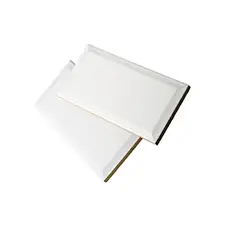
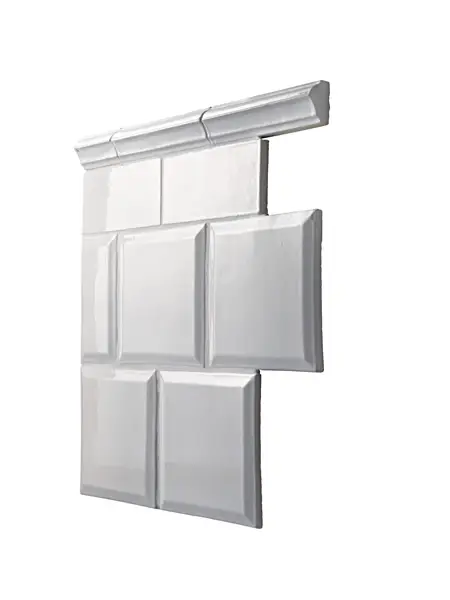
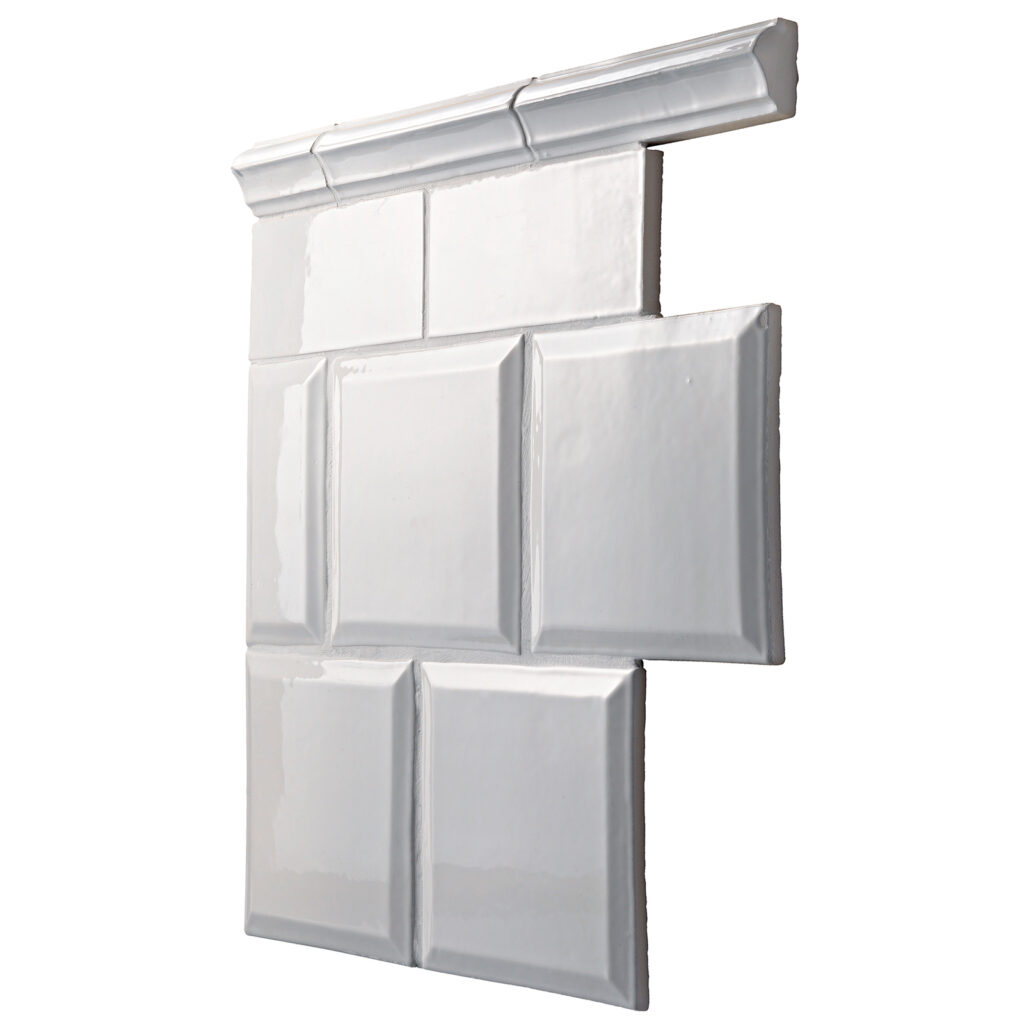
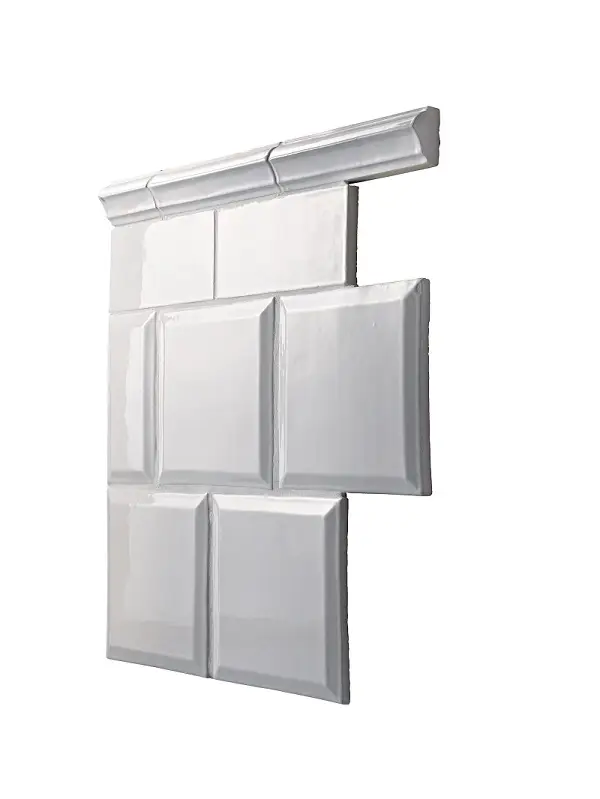
Tile beveled edges 15x15cm 0,5 sqm

1.795 SEK

Available in central stock
Quick facts

Andreas Skatter

Weight 9,65 kg
Antal/fp

22nd

Tjocklek

9-12 mm

Mått

150×150 mm

Antal/kvm

44 pcs

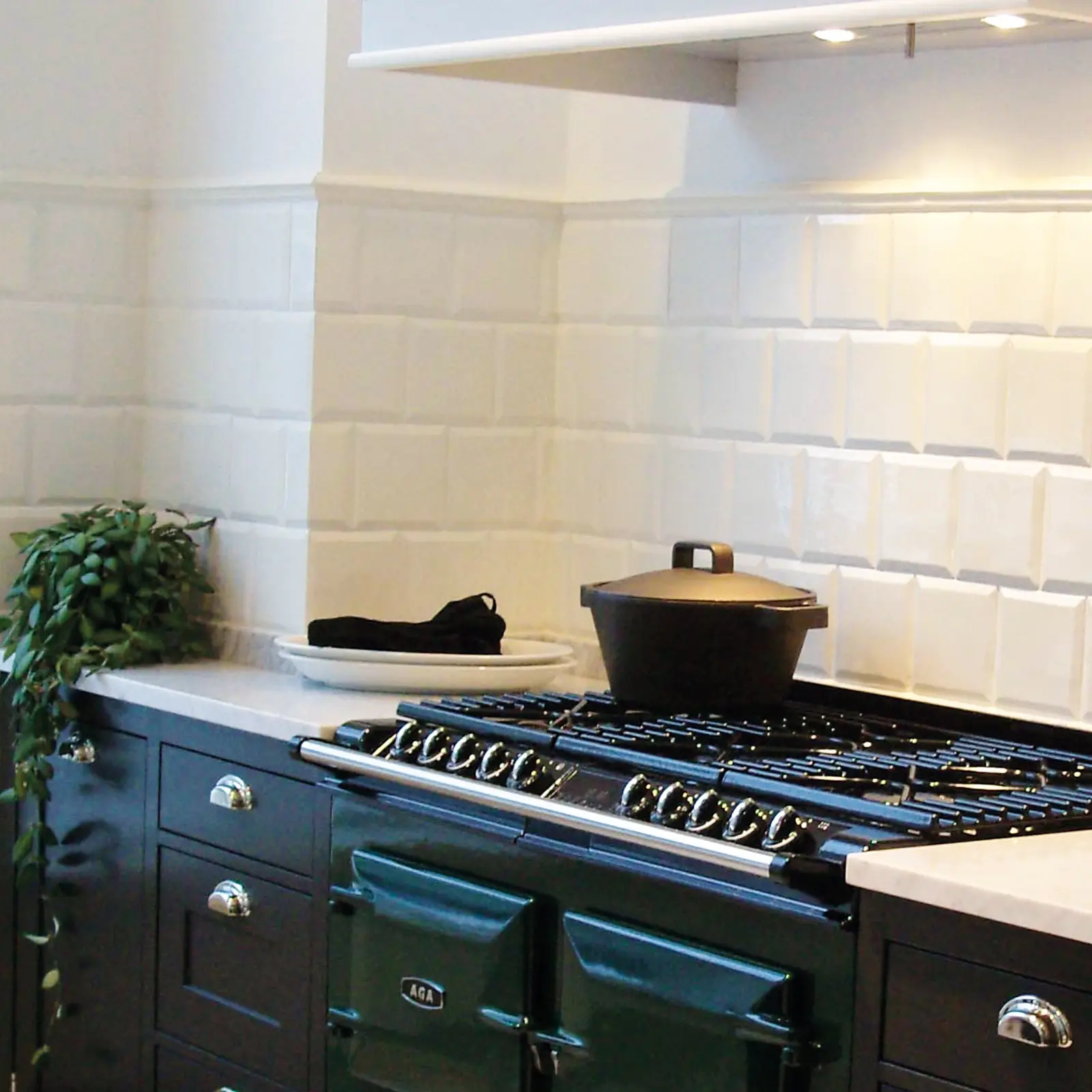
The Gysinge tile is a beveled tile for bathrooms and kitchens of a model that was common in Sweden in the late 19th and early 20th centuries. Several Swedish tile manufacturers existed at the time, including Ekeby Bruk in Uppsala.

What distinguishes Swedish tiles from international models is that Swedish tiles are usually square, not rectangular, and that they are available in so many parts, including half-tiles, borders and moldings, that a complete set can be made. The tiles are thick and strong and have a vibrant surface precisely because they are handmade and fired in old kilns. The glazing is also done by hand, which further enhances the rustic impression. All tiles are labeled “Gysinge” on the back.

0.5sqm/22 tiles in one package. Swedish-made handmade tile. White glazed by hand. Width 15cm, length 15cm, thickness 12mm, thickness edge 9mm.

Description

The Gysinge tile is a beveled tile for bathrooms and kitchens of a model that was common in Sweden in the late 19th and early 20th centuries. Several Swedish tile manufacturers existed at the time, including Ekeby Bruk in Uppsala.

What distinguishes Swedish tiles from international models is that Swedish tiles are usually square, not rectangular, and that they are available in so many parts, including half-tiles, borders and moldings, that a complete set can be made. The tiles are thick and strong and have a vibrant surface precisely because they are handmade and fired in old kilns. The glazing is also done by hand, which further enhances the rustic impression. All tiles are labeled “Gysinge” on the back.

Andreas Skatter

Weight 9,65 kg
Antal/fp

22nd

Tjocklek

9-12 mm

Mått

150×150 mm

Antal/kvm

44 pcs

Reviews

There are no reviews yet.

Be the first to review “Tile beveled edges 15x15cm 0,5 sqm”

Your email address will not be published. Required fields are marked *

Instructions for use:

As the tiles are of the old-fashioned type, i.e. thick and hand-glazed, we recommend that you also cut the tiles in the old-fashioned way, i.e. by hand and with a pulley. Feel free to change the pulley several times during the work to keep it sharp.

The tiles are laid in half-joints, i.e. the rectangular tiles are constantly shifted by half their width in relation to the next shift. If there is a gap between them, it is filled with a half tile. The border tile and cornice are also shifted in the same way. The cornice can also be mitered at the corners.

Traditionally, tiles from this period are laid with as little grout as possible. The wider the grout, the more of the effect of the beveled edges is removed. Remember also that the grout should always be white.
You may also need to

Related products

Tile Prinsen smooth 15×15 cm each

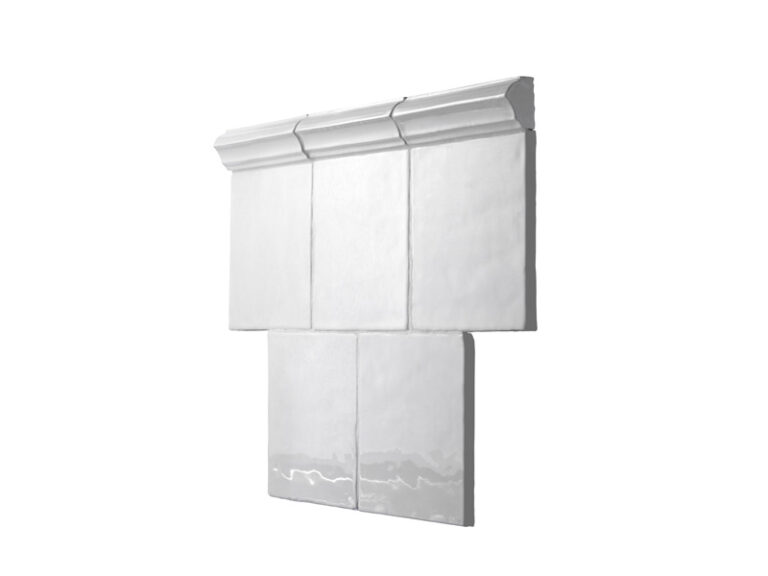
A hand-glazed, fully smooth tile based on old models with the same vibrant and shimmering surface as all other handmade tiles sold by Gysinge. A larger surface tiled with “Prinsen” therefore gives the same shimmering impression as an old handmade tile stove. The tile is excellent to combine with our borders, or with our tile breast strip if you want a time-typical ending of the tiling.

At the turn of the 20th century, fully tiled rooms, i.e. tiled from floor to ceiling, could already be found in really lavish settings. Examples of such environments are the kitchen in Hallwylska palace in Stockholm, the kitchen at Waldemarsudde, what is called “The Prince’s Kitchen” and some others. Sometimes even the ceilings were tiled. This was the case at Hallwylska Palace, for example, and in the new luxurious bathrooms built by the bourgeoisie around the turn of the century 1900. Many people have thought that this type of tiling is from later times, as the tiles are also smooth, but there was probably a hygienic reason behind the smooth surfaces. The tiles would simply be easy to wipe clean. The fact that the tiles are usually joined together with minimal grouting is another factor that supports the theory that good hygiene was the aim.

Single piece. Swedish-made handmade tile. White glazed by hand. Width 15cm, length 15cm, thickness 1,1 -1,2 cm.

89 SEK

Screw hook nickel-plated small

Turn-of-the-century screw hook made of solid nickel-plated brass with iron screw part. Common in the past as a clothes hook in rooms and hallways, as a towel rack in kitchens, etc.

Also available in brass. See related products.

Total length about 50 mm, of which the hook 30 mm

145 SEK

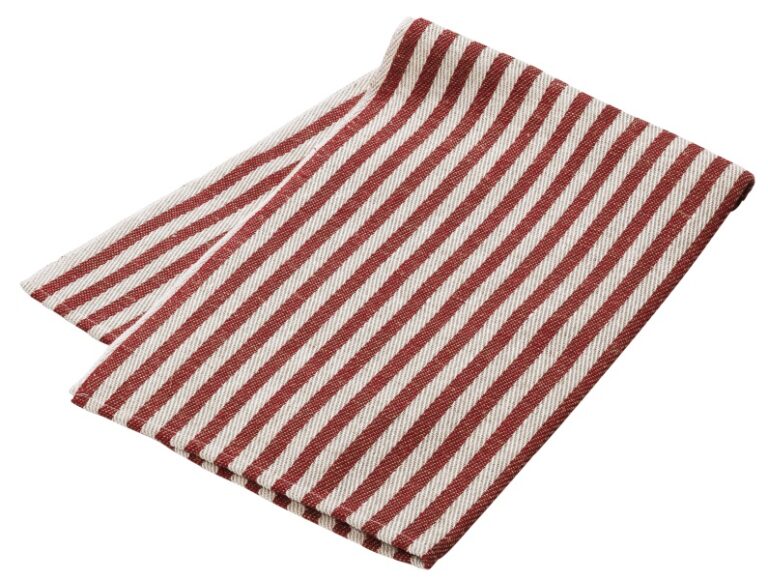
Towel white

The traditional kitchen and toilet towel in “poor man’s suit” in classic white or blue. The sturdy napkin for everyday and party.

This towel fabric is a so-called sieve weave (the pattern looks like a sieve – but only appears after washing!), woven to order for a guesthouse in Järvsö in the 60s.

The weaving method is also called poor man’s cloth, a weaving method that produced a fabric that looks much more exclusive than it really is.

The weaving method is very old and produces a highly absorbent and durable fabric, which has always been used for towels and tablecloths. The fabric is most beautiful if you mangle it, then the shiny linen threads in the weft are emphasized, against the duller warp of cotton. The quality only becomes more beautiful the more you wear the fabric.

One of the contradictions of the fabric is that as towels it gives a slightly old-fashioned robust character, while as a well-mangled tablecloth it gives an exclusive feeling of “Oh my, what’s this?”.

265 SEK

Kitchen hook chrome

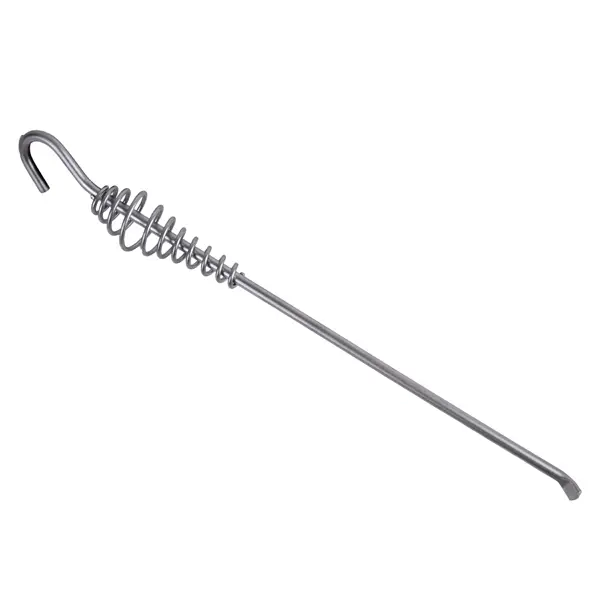
Stove hook for wood stove and fireplace of traditional 1900s model. Adapted in dimensions to older stove model.

Chrome-plated iron. Length 38 cm.

495 SEK

Pantry shelf complete

A well-made three-tiered shelf modeled on a pantry in Gävle from the 1890s. A good example of the care that was put into the carpentry of even the simplest of living spaces.

4.695 SEK

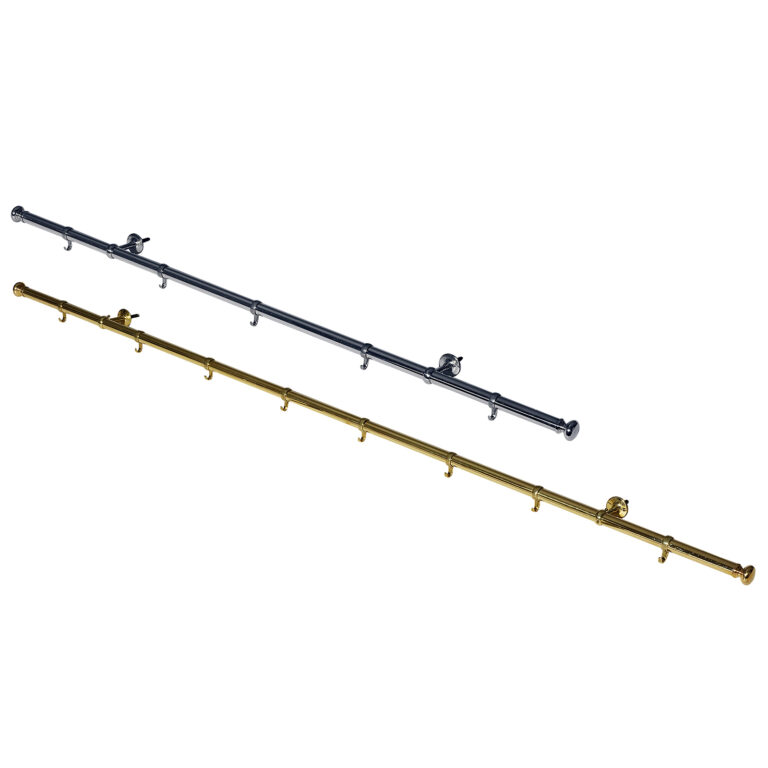
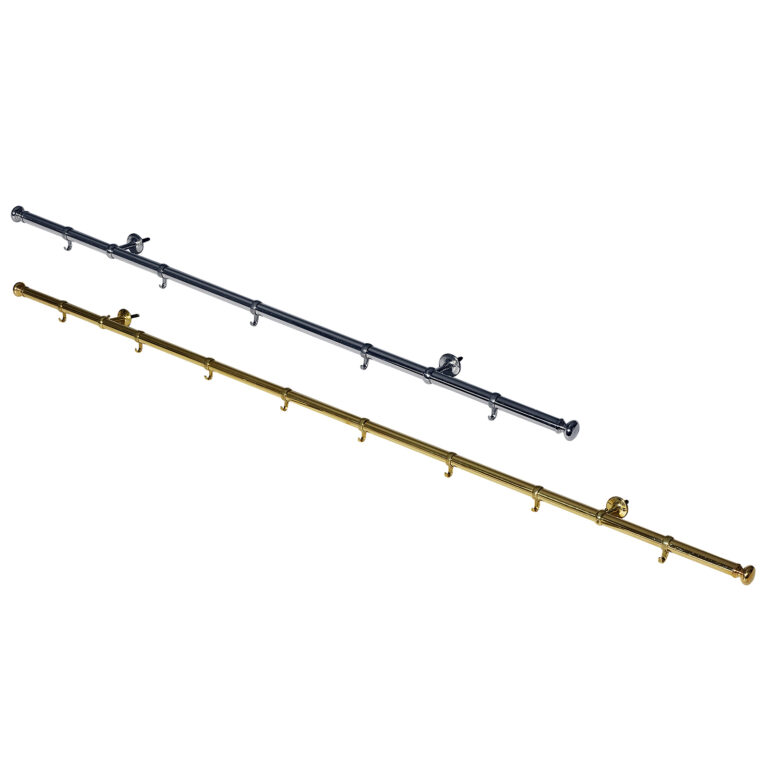
Kitchen stove rod nickel-plated 155 cm complete

Kitchen stove rod with sturdy hooks for kitchen utensils, potholders, pots etc. Can also be used as a towel rack in the kitchen, or in the bathroom. The model was common from the late 1800s until the 1930s. Highest quality.

MATERIAL Made of solid brass or in nickel-plated version. Polished shiny surface, but not lacquered. The brass darkens over time if you do not polish it.

MOUNTING The wall brackets have sturdy iron screws (3.5 mm) that are carefully screwed into the wall. The hooks and brackets are then screwed onto the bar. Last of all, tighten the screws that prevent the bar from rolling.

The bar can be shortened by sawing it off. It can also be connected to another pole if a longer version is desired. In this case, a wall bracket should be placed over the joint.

5.675 SEK

Related articles

There are no related articles for this product.

Please leave a comment what you think about our new webshop