[currency_switcher]

SKU: 3091-63

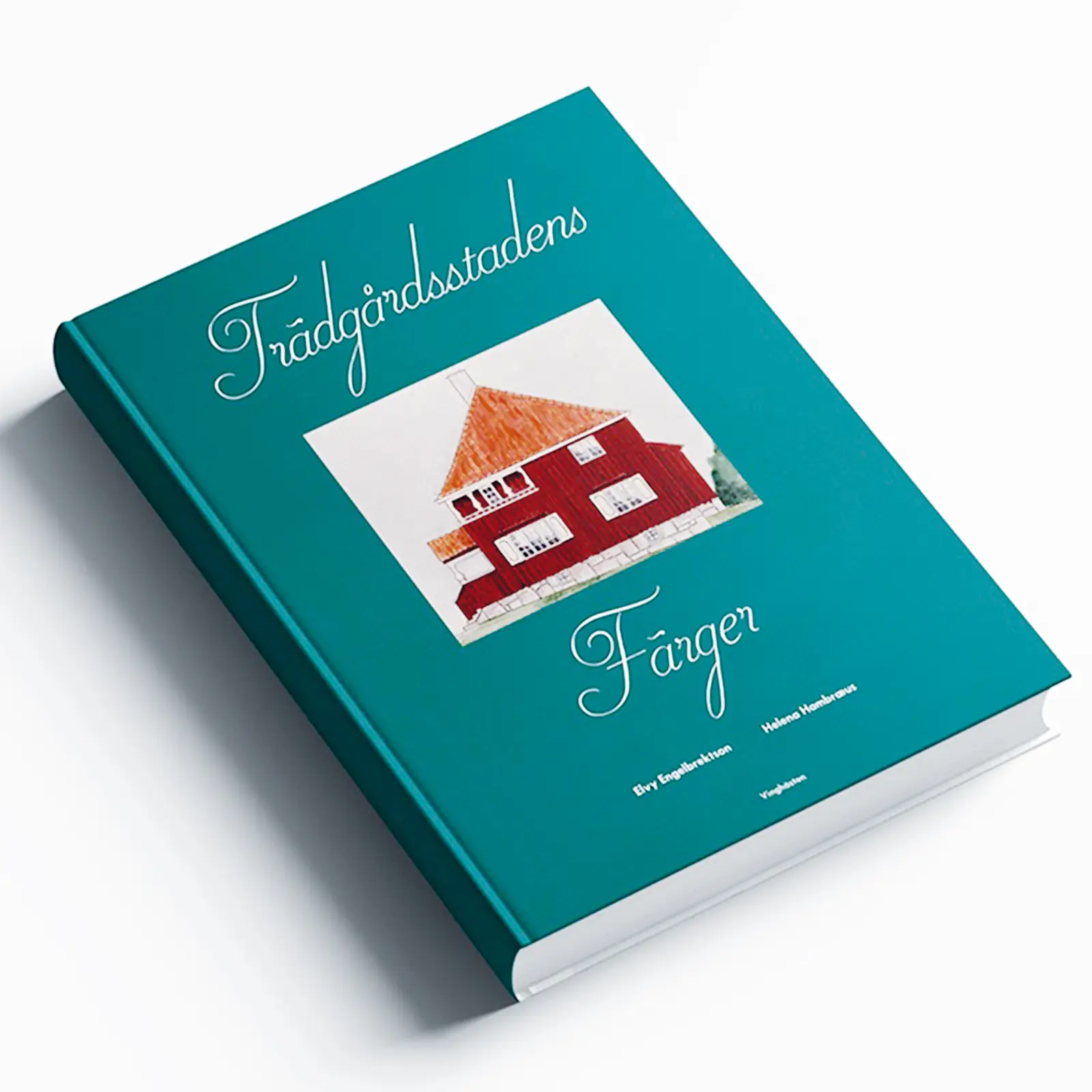
Colors of the Garden City

445 SEK

Available in central stock
Quick facts

Andreas Skatter

Weight 1,15 kg

The Colors of the Garden City explains what is special about the centuries-old cultural environments of Bromma and other garden cities in Sweden. What is it that makes the garden city such an attractive form of living even for modern people? What gives character to the urban plan and to buildings and gardens from eras with different stylistic ideals? Learn the differences between the National Romanticism of the 1910s, the Neoclassicism of the 1920s and the Functionalism of the 1930s.

The authors began their mapping of garden cities in Sweden as early as the 1980s, by producing material with color schemes and character descriptions for typical houses of the time. Parts of the material are now in a permanent exhibition in Måleributiken in Alvik and have been shown at the City Museum 2013-2015.

The purpose of the book is to draw attention to the unique cultural values of the garden city for all of us and at the same time inspire you as a homeowner to learn more about architecture and coloring. A cultural environment needs to be protected and your house needs continuous care and attention. When repairing and renovating your house – make sure you do not damage the house due to ignorance.

Large format, 22×31 cm. Hardcover in cloth binding.

152 pages. Highest paper quality. Richly illustrated with about 200 pictures. Four-color printing throughout the book.

Historical photos from the pioneer years – previously unpublished!

The authors

Elvy Engelbrektson – artist and color architect. Initiator of the Äppelviken Culture and Environment Group. Garden City Culture Day, Capital of Culture Year 1998 City Museum exhibition Garden City 100 years (2013-2015).

Helena Hambraeus – architect MSA/SAR, initiator of the Äppelviken Culture and Environment Group, Garden City Culture Day, Capital of Culture Year 1998. The City Museum’s exhibition Garden City 100 years (2013-2015).

Description

The Colors of the Garden City explains what is special about the centuries-old cultural environments of Bromma and other garden cities in Sweden. What is it that makes the garden city such an attractive form of living even for modern people? What gives character to the urban plan and to buildings and gardens from eras with different stylistic ideals? Learn the differences between the National Romanticism of the 1910s, the Neoclassicism of the 1920s and the Functionalism of the 1930s.

The authors began their mapping of garden cities in Sweden as early as the 1980s, by producing material with color schemes and character descriptions for typical houses of the time. Parts of the material are now in a permanent exhibition in Måleributiken in Alvik and have been shown at the City Museum 2013-2015.

The purpose of the book is to draw attention to the unique cultural values of the garden city for all of us and at the same time inspire you as a homeowner to learn more about architecture and coloring. A cultural environment needs to be protected and your house needs continuous care and attention. When repairing and renovating your house – make sure you do not damage the house due to ignorance.

Andreas Skatter

Weight 1,15 kg

Reviews

There are no reviews yet.

Be the first to review “Colors of the Garden City”

Your email address will not be published. Required fields are marked *

You may also need to

Related products

Iron sheet, writing

Instructions for maintenance and repair. The booklet deals with how to maintain and repair old sheet metal roofs, without losing the cultural-historical values. The emphasis in the booklet is on the workmanship and also addresses old solutions for gutters, window sills and other important details. Richly illustrated.

175 SEK

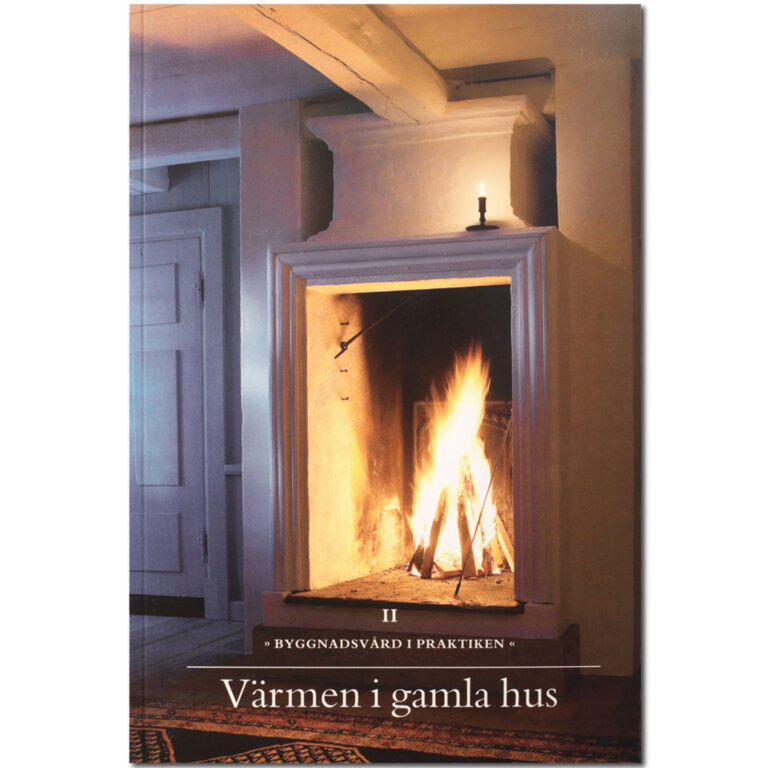
The heat in old houses

“The Heat of Old Houses” answers questions about heating and insulation of old houses. This is the second book in the series – Building Conservation in Practice.

Find out which solutions are recommended. House fireplaces and heat sources, their history and construction, and renovation aspects. Detailed advice is given on the maintenance and care of tiled stoves, fireplaces, pipe stoves, fireplaces and iron stoves.

A very practical book. Invaluable knowledge for anyone working with older houses.

285 SEK

It’s in the walls

Many of us love old houses, the atmosphere they give you, the secrets and questions they hide and pose: What did the house look like originally? Has it always been here? Who has lived here before me?

Sweden has a unique treasure trove of archived material that can tell us so much about our houses and their inhabitants throughout history. This is by no means limited to castles and manor houses. There is also a lot to tell about our country houses, detached houses, city apartments and suburban villas. You just need to know where to look.

In this book, architectural historian Erika Åberg wants to take us by the hand and tell us how we can find the history of our houses, and how we can best utilize different buildings and their annual rings. She does this by telling inspiring stories, guiding us to different archives and showing us how to best interpret a building, exterior and interior.

There are plenty of in-depth examples from the TV program of the same name, but it’s a book that stands on its own, with solid advice on building styles through the ages, building conservation and restoration tips.

289 SEK

Period kitchens & bathrooms 1880-2000

The book provides an illustrative picture of the standard and style development of kitchens and bathrooms in Sweden’s apartment buildings and detached houses. The design and equipment of kitchens and bathrooms follow the spirit of the times through the decades, both technically and functionally. At the same time, history bears clear traces of how the view of housework and life in the home has changed over time.

The story begins in the 1880s, when many cities are growing rapidly in the wake of industrialization. There is a housing shortage and economic conditions are tight. Homes are heated by tiled stoves or fireplaces, food is cooked on wood stoves and there are dry toilets in the yard. 120 years later, in 2000, when the story ends, high standards in kitchens and bathrooms are a matter of course. New trends follow one another and many kitchens and bathrooms are torn out and rebuilt, long before it is technically necessary.

Increased knowledge of period interiors is a valuable basis for conservation, renovation and remodeling. Inspiration can be drawn from the floor plans, kitchen layouts and furnishings of different periods.

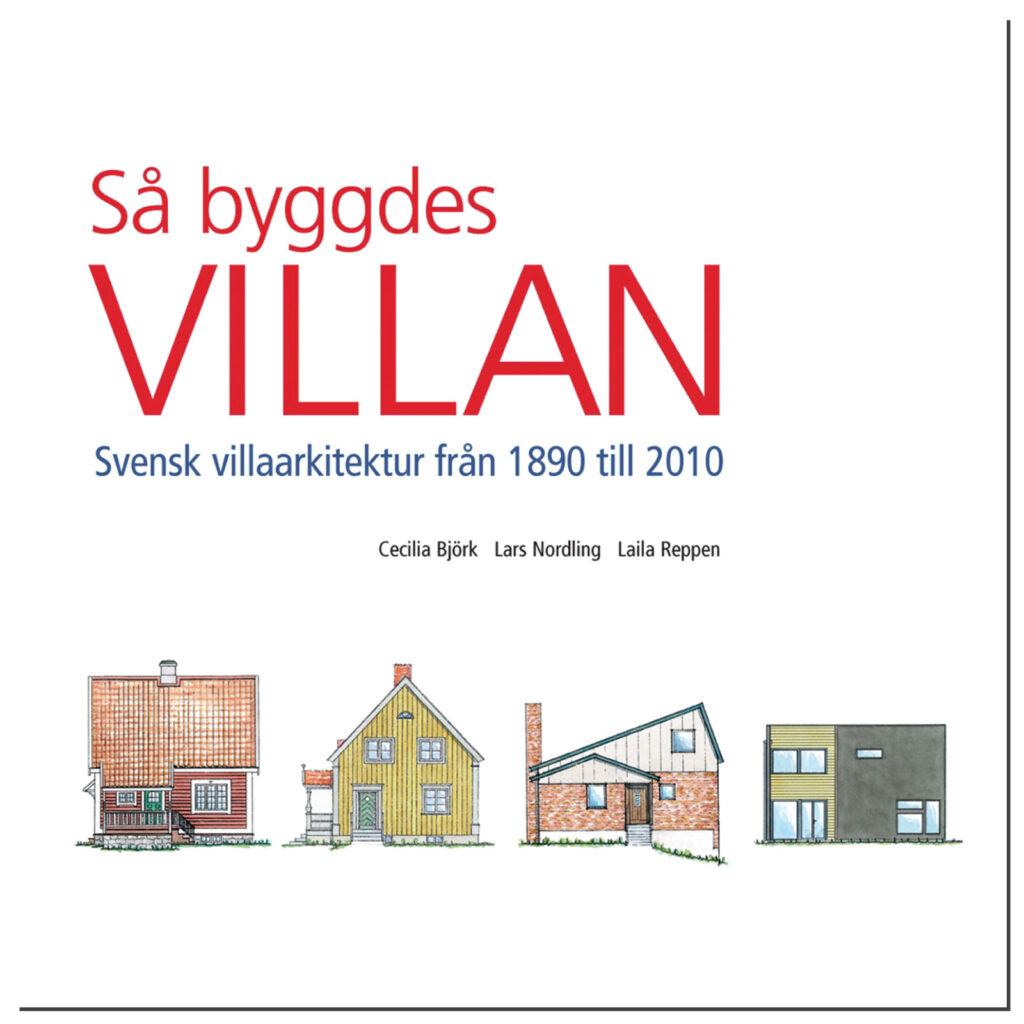
Cecilia Björk architect SAR/MSA and Laila Reppen architect SAR/MSA are authors and illustrators of books such as Så byggdes husen 1880-2000, Så byggdes staden, Så byggdes villan and Tidstypiskt. Gustav Bergström, “Rävjägaren”, is a civil engineer as well as a writer and opinion leader in architecture and building conservation.

The book is nominated for Book of the Year 2020.

395 SEK

Building maintenance for apartments

Building Care for Apartments takes its starting point in the emergence of the modern city at the end of the 19th century and allows us to follow the development of the Swedish apartment decade by decade, until the end of the 1980s. By highlighting how political forces have interacted with aesthetic ideals and construction technology, the book provides a unique insight into why our homes look the way they do. From the design of residential areas and the appearance of facades, to the division of rooms, the colors of walls and the specific profiles of skirting boards. In an accessible way, you will learn about the rich history hidden behind the perhaps worn floors or flaking wallpaper.

The second part of the book consists of an extensive chapter devoted entirely to the practical aspects of renovation and apartment care. It presents concrete strategies for approaching and dealing with issues related to care and renovation, as well as practical tips on how best to proceed when faced with the need to restore or replace something.

Building Conservation for Apartments is an indispensable tool for anyone interested in preserving their apartment and its history.

445 SEK

Typical of the time

Stylistic shifts in everyday architecture
Tidstypiskt gives those who influence and develop residential buildings and interiors a tool to base long-term sustainable management and development of the building stock on knowledge of existing values.

The authors take us on a hundred-year journey through stylistic changes in everyday architecture. Typical building details from Stockholm are presented decade by decade. From the classicist architecture of the 1880s via the stripped-down functionalism of the 1930s to the 1970s return to the grammar of the stone city as an ideal.

The building details vary with the prevailing architectural style, from the composition of the facades to the division of the windows and the design of the door handles. The reader is given the opportunity to learn and interpret the buildings and details of different periods. Knowledge provides richer experiences and constantly new impressions of everyday architecture – our built cultural heritage.

Photographs and drawings clearly show the development of residential buildings in the city and the traces left by different styles.

A drawing section makes it possible to date door linings and floor plinths – or to use the drawings to make new ones.

The book is aimed at architects, real estate developers, property managers, property owners, but also at housing associations and homeowners. The book is also suitable for teaching purposes.

615 SEK

Related articles

There are no related articles for this product.

Please leave a comment what you think about our new webshop